About the Journal

YUYAY,® (ISSN: 2953-6685 e-ISSN: 2953-6677)  is a journal dedicated to the dissemination of multidisciplinary scientific content in the field of education. It is published by JLA Ediciones (FLO–GYE–SP) and develops thematic lines that critically reflect on and connect academic concerns in the social sciences, education, technologies and innovation, arts, and humanities with local, regional, and global issues. Its contents are addressed to the scientific community and to all those interested in learning about, expanding, and deepening—through academic perspectives—topics of social, pedagogical, political, cultural, technological, and economic debate, among other subtopics belonging to the aforementioned areas and included in UNESCO’s International Standard Classification of Education (ISCED) (2011). YUYAY® operates through the indexed scholarly communication system Open Journal Systems (OJS/PKP) and receives manuscripts for quarterly digital publication, with two volumes and a maximum of 16 articles per issue, according to the following schedule: April–June; July–September; October–December; January–March, and an annual printed compilation. The journal publishes original and unpublished articles resulting from research progress reports, case studies, results analyses, methodologies, pedagogical practices, institutional perspectives, classroom design models, theoretical and technological development and innovation projects, academic-scientific diplomacy (including experimental approaches), and social development initiatives.

Announcements

Manual re-upload of published works and metadata validation in OJS

2026-01-21

Dear academic community,

On behalf of the Editorial Board and the Scientific Committee, we thank all authors who have already received their publication certificates. Following the server migration and the OJS upgrade, we are conducting a manual re-upload process requiring mandatory metadata validation, including ORCID and other authorship details.

Please note that no data has been lost. Uploads will proceed according to the assigned DOIs.

Thank you for your understanding and support.

Sincerely,
Editorial BoardScientific Committee

Read more about Manual re-upload of published works and metadata validation in OJS

Current Issue

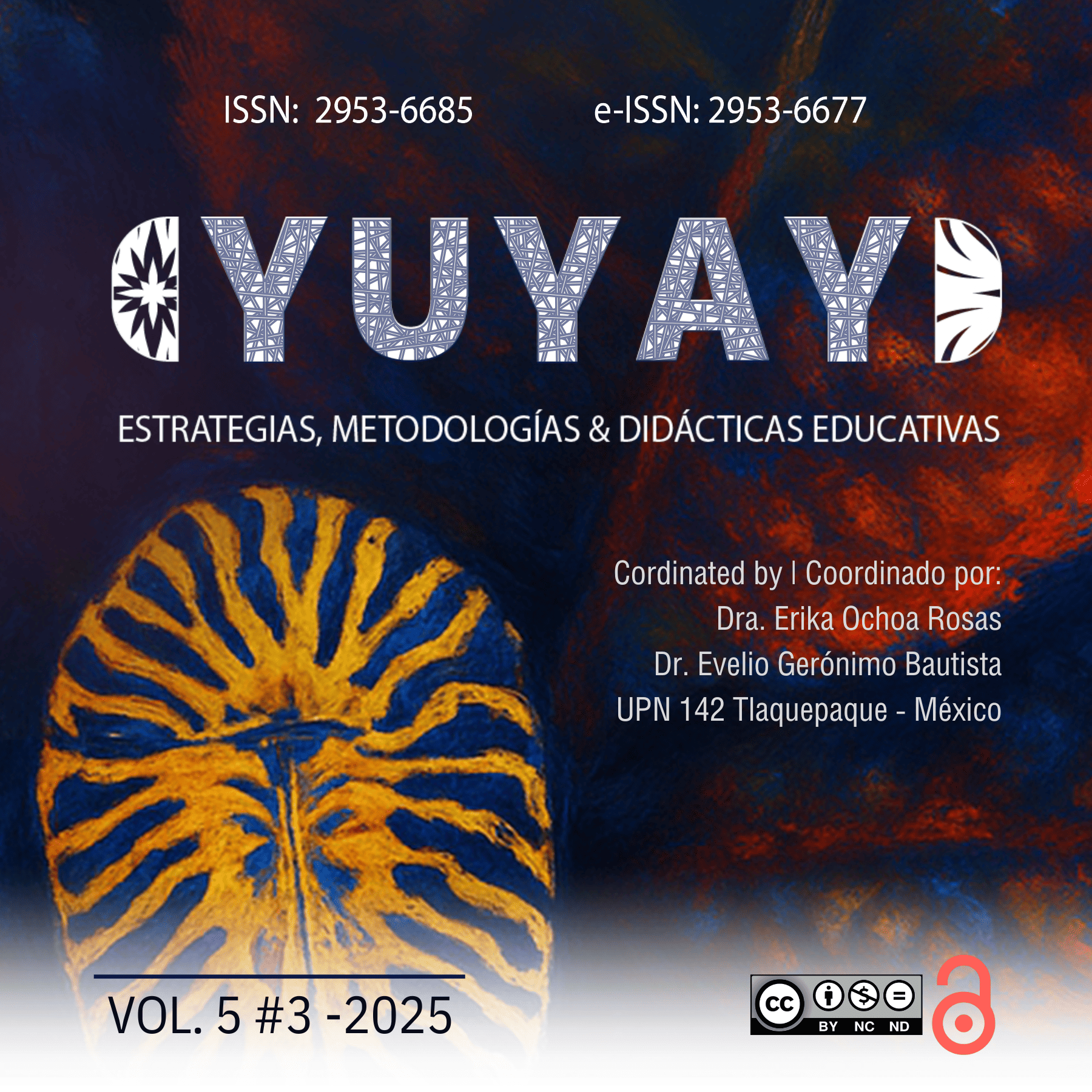
Vol. 5 No. 3 (2025): Socio-emotional development and visions for the future of education and technologies
Socio-emotional development and visions for the future of education and technologies

Part 2: Educational research in Latin America is currently undergoing a moment of profound questioning. Traditional discourses, anchored in the mere description of methodologies and results, reveal their limits in the face of the cultural, social, and technological tensions shaping the present. Within this context, it becomes necessary to understand education not only as an object of study, but also as a field of cultural creation, political struggle, and human sensitivity.

This special issue, coordinated by Dr. Erika Ochoa Rosas and Dr. Evelio Gerónimo Bautista from the National Pedagogical University, UPN 142 Tlaquepaque (Mexico), proposes a dialogue between science and culture, where educational practice is conceived as a situated phenomenon. Beyond its instrumental function, teaching and learning emerge as processes deeply shaped by historical memory, collective emotions, and technological transformations that are redefining what it means to be human in contemporary societies.

The articles gathered here go beyond the mere reporting of experiences. The authors examine the ethical dimension of teaching, the relevance of socio-emotional training in a world marked by precarity and uncertainty, and the ways in which digital technologies can become tools of emancipation or exclusion. In doing so, research becomes intertwined with the living culture of specific territories, acknowledging existing inequalities while also highlighting the creative possibilities that emerge from the margins.

The contents of this issue do not offer standardized solutions or empty recipes of innovation. Instead, they pose questions that invite us to rethink pedagogy as a social, political, and cultural practice. The contributions emphasize the urgency of recognizing classrooms as spaces of memory and resistance, teaching as an ethical and community-based endeavor, and technology as a cultural mediation that must serve social justice and the recognition of diversity.

In this sense, the volume inscribes itself within the ecologies of knowledge, understood as networks where scientific knowledge, cultural traditions, and everyday experiences enter into dialogue. It is an editorial gesture that calls upon teachers, researchers, students, and communities to approach reading as a reflective and collective act, where science and culture interweave to imagine more humane, inclusive, and sustainable educational futures.

Published: 2025-12-11
View All Issues