Palavras-chave: Barreiras,
aprendizagem, educação virtual, limitações, FATV
Introduction
The skills and competencies that entrepreneurs
demand from professionals in the financial area have been significantly
transformed, and even more so in recent years with the accelerated advancement
of technology. This transformation is not only focused on technical or hard
competencies, but also on soft skills that are essential for professional and
organizational success.
Hard skills are those competencies that can be
acquired through training and professional experience, they are also specific
skills that give way to the performance of activities, tasks or work aimed at
achieving objectives and decision-making. (Buxarrais M., 2013).
Soft skills refer to the capabilities that allow a
person to develop holistically in different areas, including the ability to
work under pressure, adaptability to different environments, skills to receive
and learn from criticism, self-confidence and reliability, effective
communication, problem solving, critical and analytical thinking, efficient
time management, teamwork, proactivity and initiative, curiosity and
imagination, willingness to learn, and balance between personal, family, social
and work life, among other aspects. (Buxarrais M., 2013).
Chiavenato (2007) points out that work performance
is linked to collaborative development, he also indicated that productivity in
an institution occurs when the individual has been instilled with positive
behaviors towards work, so that he feels committed and identified with the
ideals of the institution, thus he defines as characteristics of work
performance, commitment, quality at work, teamwork and productivity. (p. 203).
The present study identifies and analyzes the hard
and soft skills that entrepreneurs demand from financial professionals in
Cercado – Cochabamba, through a descriptive analysis research, it seeks to
distinguish the requirements of companies in both the corporate and banking
sectors, to achieve the aforementioned objective, data collection instruments
were applied to the aforementioned sampling frames, data that after being
collected was meticulously analyzed from specialized software. Through this
study, it is expected to provide information that contributes to the training
and professional development of future financiers, as well as the adaptation
and updating of what companies require.
Methodology
The research was carried out from a quantitative
approach, for this purpose surveys were used as data collection instruments.
Once the data were collected, they were statistically processed using
specialized SPSS software.
Sample Design Process
There is a registry of 59,323 companies in the
department of Cochabamba, the number of financial intermediation entities that
exist in the country was also investigated and according to the Financial
System Authority (ASFI) the supervised entities with operating licenses are 69,
of which twelve belong to multiple banks, two to SME banks, three housing
financial institutions, 41 open and corporate savings and credit cooperatives,
two state financial institutions or with a majority stake and nine development
financial institutions. To determine the sample size for private companies in
the city of Cochabamba, the following proportional sampling formula for finite
populations will be used:
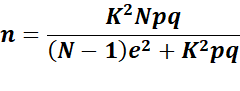
Where:



p = Probability of success
q = Probability of failure

Considering
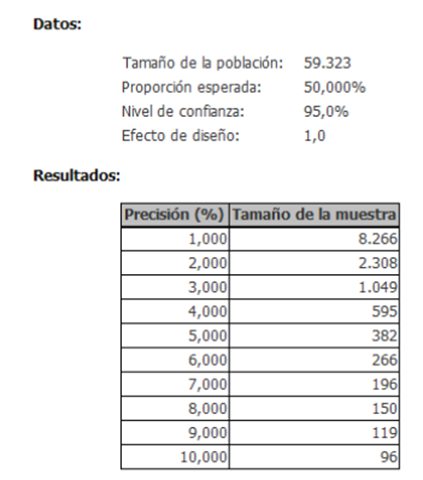
that the number of private companies in the city of Cochabamba is 59,323, we
will work with a confidence level of 95% with a significance level of 5%, an
absolute error of 9%, a probability of success of 50% and a probability of
failure of 50%, this probability is used since there are no studies like the
one proposed. For this purpose, the sample size to carry out the research is
the same:
Therefore, a total of 119 surveys have been carried
out, of which 99 surveys were applied to private companies and 20 surveys to
the banking sector in the city of Cochabamba. The chart was obtained and
presented in their native language (Spanish).
Results and analysis
The following
software was used to analyze the perceptions of the
private business sector regarding hard and soft skills and job performance in
professionals of the Financial Engineering career: Epidat
software was used for sample design, Microsoft Forms software was used for the
design of the survey, SPSS statistical software was used for tabulation, coding
and analysis of the information.
Regarding the
development of the fieldwork, surveys were carried out with private sector
entrepreneurs in Cochabamba Cercado, segmenting the corporate sphere into the
financial sphere, where the majority was banking. Subsequently, the data
obtained from the univariate and multivariate analyses were systematized.
After conducting the study, it was observed that, of
the total number of respondents, 55% belonged to the male gender and 45% to the
female gender. The average age of the business sector of the people surveyed is
35 years old on average. The survey involved private sector companies, both
corporate companies and financial intermediation entities.
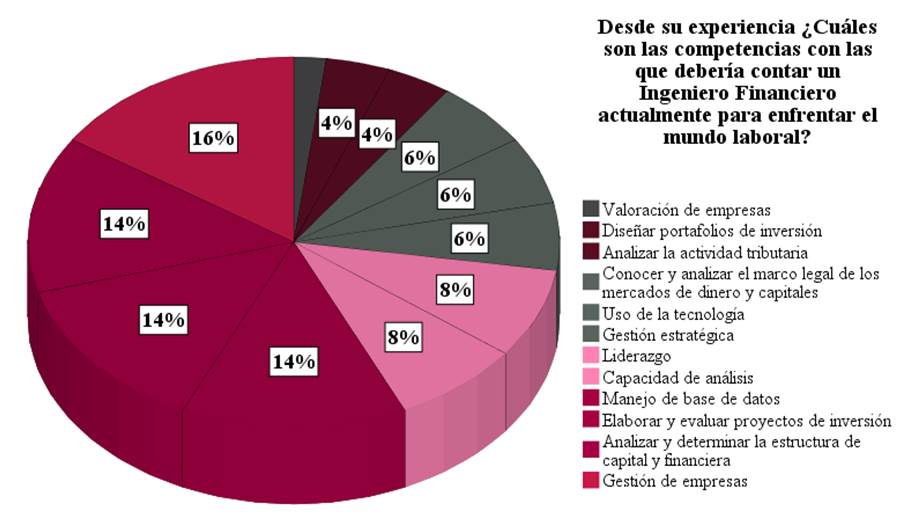
Figure 1.
Competencies for a financier – entrepreneur vision
Source:
Own elaboration (2024). The chart was obtained and presented in their native
language (Spanish).
16% of respondents consider that knowledge in
business management is the most important skill for a financier, followed by
the management of databases and the ability to evaluate and develop investment
projects while analyzing and determining the financial capital structure, both
with 14% of the responses.
Figure 2.
Competencies for a financier according to banking experts

Source: Own elaboration (2024). The
chart was obtained and presented in their native language (Spanish).
According to respondents from the banking sector, a
Financial Engineer must possess key competencies such as a solid analytical
ability to evaluate financial statements, recent information regarding news and
news. In addition, it is essential that they master technological tools and
programs such as Python, SQL, and R. They must be proficient in risk
management, proactive, and have analytical thinking for decision-making, as
well as be able to adapt to changes.
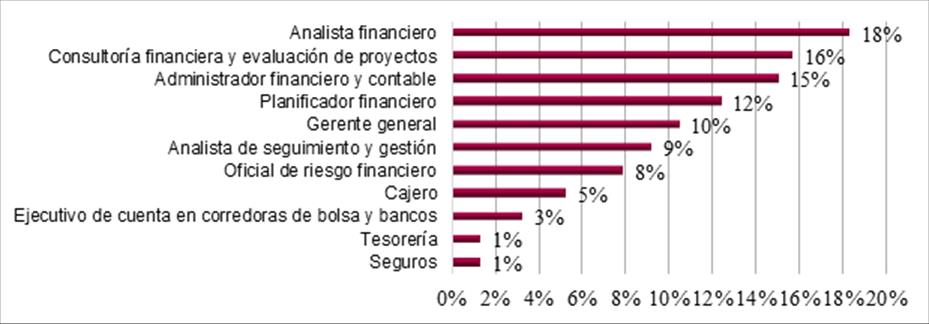
Figure 3.
More erranded
jobs
Source:
Own elaboration (2024). The chart was obtained and presented in their native
language (Spanish).
The jobs most in demand by Financial Engineers, according
to respondents who work in the corporate sector are: 18% financial analyst, 16%
consulting and project evaluation and 15% financial administrators and
accountants.
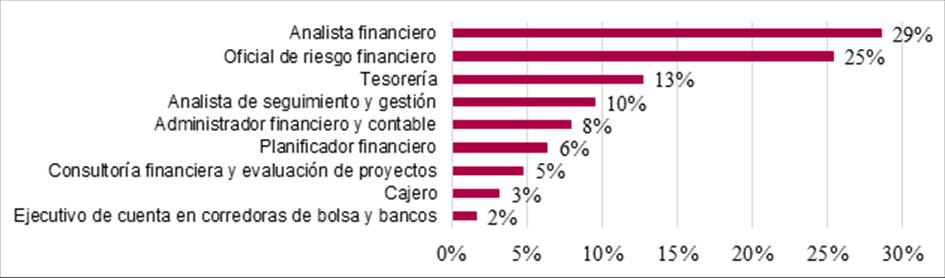
Figure
4.
Most in-demand jobs, banking sector
Source:
Own elaboration (2024) The chart was obtained and presented in their native
language (Spanish).
The jobs most in demand by financial engineers, according
to the opinion of entrepreneurs working in the banking sector are: 29%
financial analyst, 25% financial risk officer and 13% treasury. The jobs most
in demand by financial engineers, according to the opinion of entrepreneurs
working in the banking sector are: 29% financial analyst, 25% financial risk
officer and 13% treasury.
|
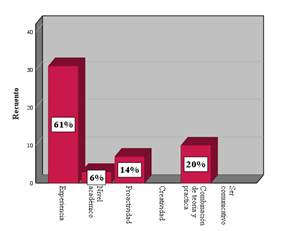
Figure 5.
Senior Manager - Entrepreneurs
Source:
Own elaboration (2024)
|
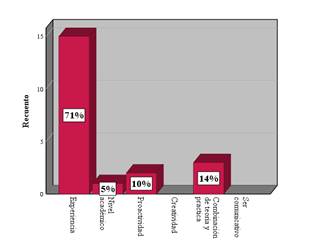
Figure 6.
Senior Manager - Banking
Source: Own elaboration (2024)
|
According to Figure 5, what they consider most important in
a person who holds the position of senior manager according to entrepreneurs is
experience. According to Figure 6, 71% of bankers value experience, followed by
the combination of theory and practice.
|
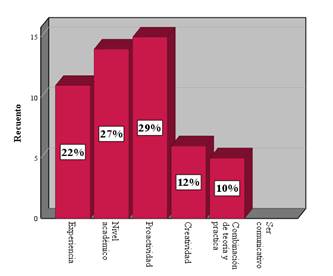
Figure 7.
Junior Employee - Entrepreneurs
Source:
Own elaboration (2024)
|
Figure 8.
Junior Clerk - Banking

Source:
Own elaboration (2024)
|
In Figure 7, according to the employers, 29% of respondents
consider proactivity to be the most relevant factor for a Junior position,
followed by academic level and experience. Figure 8 shows that the opinions of
entrepreneurs in the banking sector consider academic level to be more
important, followed by proactivity.
|
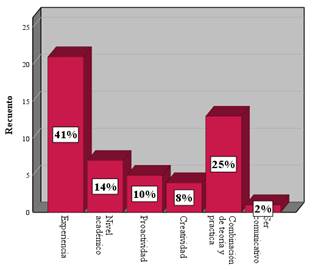
Figure 9.
Financial Analyst - Entrepreneurs
Source:
Own elaboration (2024)
|
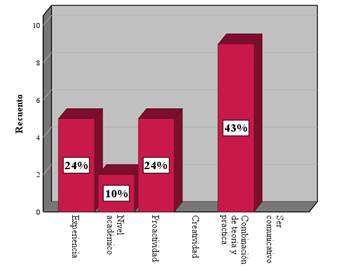
Figure
10.
Financial Analyst - Banking
Source:
Own elaboration (2024)
|
In Figure 9, 41% of respondents consider experience to be
the most relevant factor for a person to perform their role as a financial
analyst, 25% consider the combination of theory and practice to be crucial. In
Figure 10, entrepreneurs in the banking sector consider the combination of
theory and practice to be the most relevant factor, followed by experience and
academic level respectively, and 10% value proactivity.
|
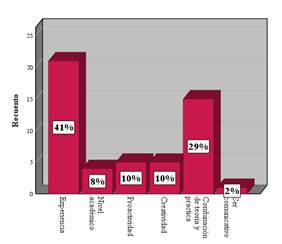
Figure
11.
Financial Risk Officer - Entrepreneurs
Source:
Own elaboration (2024)
|
Figure
12.
Financial Risk Officer - Banking
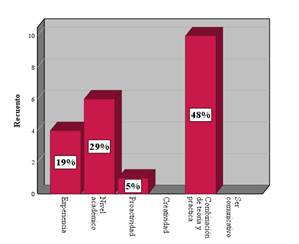
Source:
Own elaboration (2024)
|
Figure 11 shows that 41% of
respondents consider experience to be the most relevant factor for a person to
perform their roles as a Financial Risk Officer, 29% the combination of theory
and 10% value proactivity and creativity. Figure 12 shows that entrepreneurs in
the banking sector consider the combination of theory and practice to be the
most relevant factor, 29% who believe that academic level is important, 19%
value experience and 5% proactivity.
|
Figure
13.
Monitoring and Management Analyst-Entrepreneurs
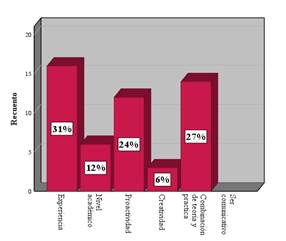
Source:
Own elaboration (2024)
|
Figure
14.
Monitoring & Management Analyst - Banking
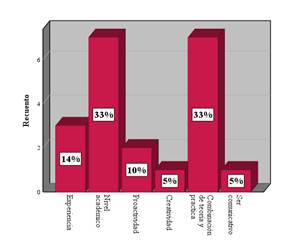
Source:
Own elaboration (2024)
|
Figure 13 shows that 31% of respondents, from the business
sector, consider that experience is the most relevant factor for professionals
to work as a monitoring and management analyst, 27% believe that the
combination of theory and practice is crucial. In Figure 14, 33% of the banking
sector states that the academic level together with the combination of the
theoretical and the practical are the most relevant factors.
|
Figure
15.
Financial Consulting & Project
Evaluation-Entrepreneurs
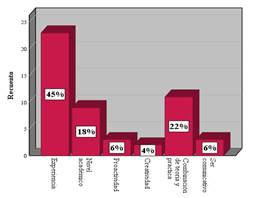
Source:
Own elaboration (2024)
|
Figure
16.
Financial Consulting & Project Evaluation - Banking
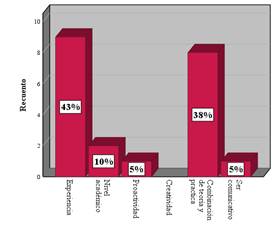
Source:
Own elaboration (2024)
|
In Figure 15, 45% of respondents consider experience to be
the most relevant factor, 22% the combination of theory and practice is crucial
and 18% value academic level to work as a financial consultant and project
evaluator. In Figure 16, 43% of respondents consider experience to be the most
relevant factor, followed by 38% who believe that the combination of theory and
practice is crucial, while 10% value academic level and 5% consider proactivity
and being communicative, to work as a financial consultant and project
evaluator.
|
Figure
17.
Account Executive at Brokerages and Banks - Entrepreneurs
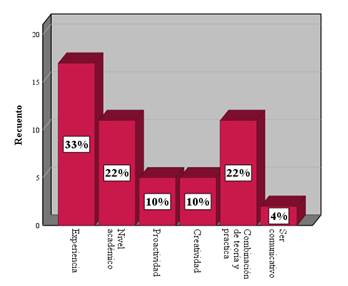
Source:
Own elaboration (2024)
|
Figure
18.
Account Executive at Brokerages and Banks - Banking
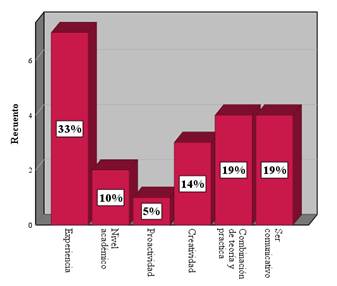
Source:
Own elaboration (2024)
|
Figure 17 shows that 33% of respondents believe that
experience is considered the most relevant factor for a professional to work as
an account executive, and 22% say that the combination of theory, practice and
academic level is crucial. In Figure 18, 33% of banking entrepreneurs indicate
that experience is the most relevant factor, 19% believe that the combination
of theory, practice and being communicative is crucial, while 14% value
creativity.
|
Figure 19
Financial and Accounting Administrators - Entrepreneurs
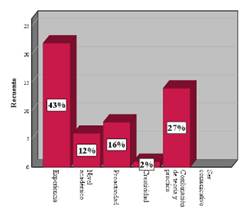
Source:
Own elaboration (2024)
|
Figure 20
Financial Administrator & Accountant - Banking
Source:
Own elaboration (2024)
|
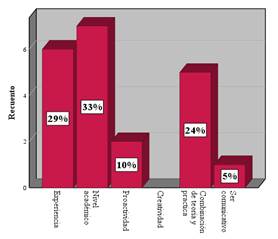
Figure 19 shows that 43% of respondents believe that
experience is the most relevant factor for a professional to work as a
financial manager, 27% believe that the combination of theory and practice is
crucial, and 16% value proactivity. Figure 20, 33% of respondents consider that
academic level is the most relevant factor, 29% believe that experience is
crucial and 24% value that the person combines theory with practice.
|
Figure 21
Treasury- Entrepreneurs
Source:
Own elaboration (2024)
|
Figure 22
Treasury - Banking
Source:
Own elaboration (2024)
|
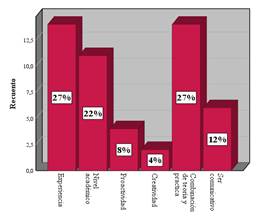
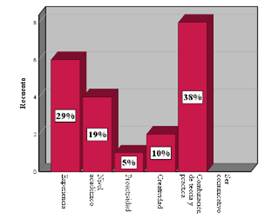
In Figure 21, for a person who works in the Treasury area,
27% of respondents consider that experience and the combination of theory and
practice are the most relevant factors, followed by 22% who believe that
academic level is important. Figure 22 shows that 38% of respondents from the
banking sector consider the combination of theory and practice as the most
relevant factors, followed by 29% who believe that experience is important and
19% value academic level.
|
Figure 23
Level of Education for a Senior Manager - Entrepreneurs
Source:
Own elaboration (2024)
|
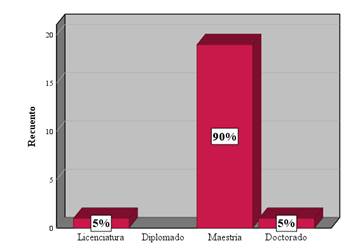
Figure 24
Academic Level - Senior Manager - Banking
Source:
Own elaboration (2024)
|
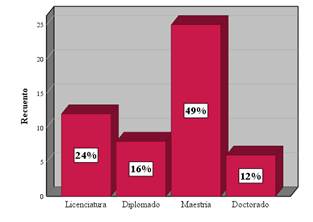
According to Figure 23, 49% of respondents from the
business sector believe that it is necessary to have a master's degree, 24%
consider that a bachelor's degree is sufficient and 16% believe that a diploma
would be adequate. In Figure 24, 90% of respondents from the banking sector
believe that it is necessary to have a master's degree, while 5% consider that
a bachelor's degree is sufficient, although they recognize that it all depends
on the field and the specialization required.
|
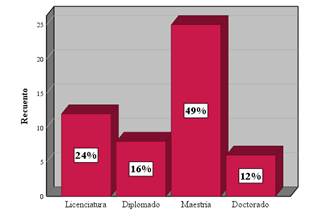
Figure 23
Level of Education for a Senior Manager - Entrepreneurs
Source:
Own elaboration (2024)
|
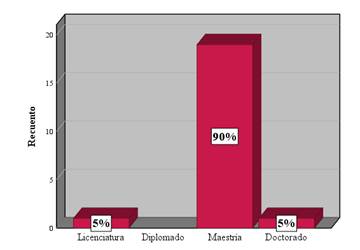
Figure 24
Academic Level - Senior Manager - Banking
Source:
Own elaboration (2024)
|
According to Figure 23, 49% of
respondents from the business sector believe that it is necessary to have a
master's degree, 24% consider that a bachelor's degree is sufficient and 16%
believe that a diploma would be adequate. In Figure 24, 90% of respondents from
the banking sector believe that it is necessary to have a master's degree,
while 5% consider that a bachelor's degree is sufficient, although they
recognize that it all depends on the field and the specialization required.
|
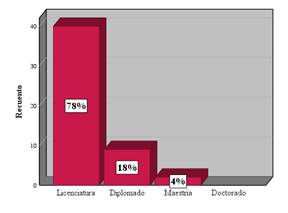
Figure
25
Level of Education for a Junior - Entrepreneurs
Source:
Own elaboration (2024)
|
Figure 26
Academic level for a Junior - Banking
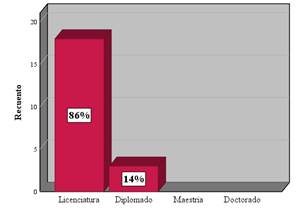
Source:
Own elaboration (2024)
|
According to Figure 25, 78% of respondents from the
business sector consider that a bachelor's degree is sufficient to perform this
position, while 18% consider a master's degree. Looking at Figure 26, 86% of
the banking sector consider that a bachelor's degree is sufficient to perform
this position, while 14% believe that it is necessary to have a master's
degree.
|
Figure 27
Level of Education for a Financial Analyst -
Entrepreneurs
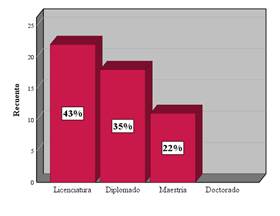
Source:
Own elaboration (2024)
|
Figure 28
Academic level - financial analyst - Banking
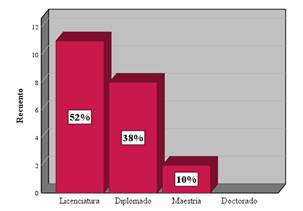
Source:
Own elaboration (2024)
|
According to Figure 27, 43% of respondents from the
business sector consider that a bachelor's degree is sufficient to perform this
position, while 35% believe that it is necessary to have a diploma in the area.
Looking at Figure 28, 52% of respondents from the banking sector consider that
a bachelor's degree is suitable for this position, while 38% believe that it is
necessary to have a diploma in the area.
|
Figure 29
Academic Level - Financial Risk Officer - Entrepreneurs
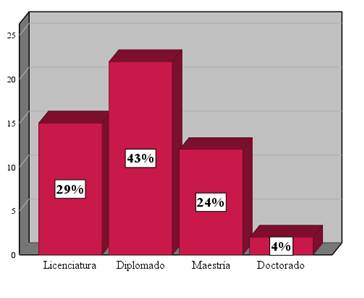
Source:
Own elaboration (2024)
|
Figure 30
Academic Level - Financial Risk Officer - Banking
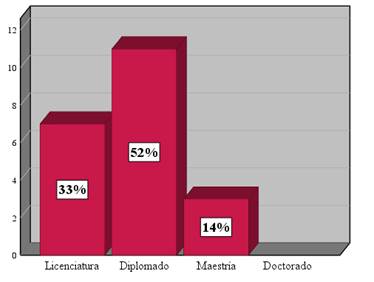
Source:
Own elaboration (2024)
|
According to Figure 29, 43% of the business sector
considers that a diploma in the area is suitable for the position, while 29%
believe that a bachelor's degree is suitable. In Figure 30, 52% of respondents
from the banking sector consider that a diploma in the area is suitable for the
position, while 33% say that a bachelor's degree is suitable.
|
Figure 31
Academic level - Monitoring and management analyst -
Entrepreneurs
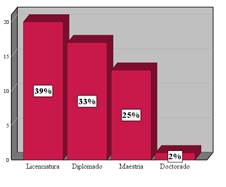
Source:
Own elaboration (2024)
|
Figure 32
Academic Level - Monitoring and Management Analyst -
Banking
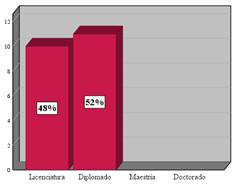
Source:
Own elaboration (2024)
|
According to Figure 31, 39% of respondents from the
business sector consider that a bachelor's degree is sufficient to occupy a
position as a monitoring and management analyst, while 33% believe that a
diploma is a better option. According to Figure 32, the results of the banking
sector, 52% of respondents believe that a diploma is a good option and 48% of
entrepreneurs take a bachelor's degree as an optimal choice.
|
Figure 33
Academic Level – Insurance – Entrepreneurs
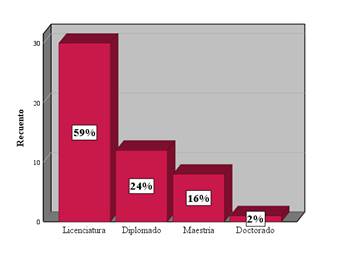
Source:
Own elaboration (2024)
|
Figure 34
Academic level – Insurance - Banking
Source:
Own elaboration (2024)
|
According to Figure 33, 59% of respondents from the
business sector consider that a bachelor's degree is sufficient for the
insurance area, 24% believe that a diploma is more convenient. According to
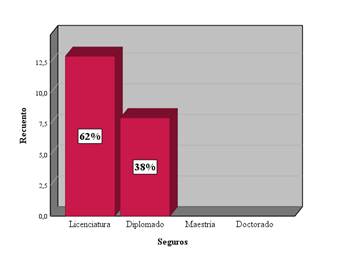
Figure 34, the results of the banking sector, 62% of respondents consider that
a bachelor's degree is suitable for the position, while 38% believe that a
diploma is a better option. They also value continuous training and
specialization in insurance, which suggests the importance of practical and
specific skills.
|
Figure 35
Academic level - Financial consulting and project
evaluation - Entrepreneurs

Source:
Own elaboration (2024)
|
Figure 36
Academic level - Financial consulting and project
evaluation - Banking
Source:
Own elaboration (2024)
|
Figure 35 illustrates the opinions of entrepreneurs on the
level of education required to occupy a position in financial consulting and
project evaluation. 27% of those surveyed believe that a bachelor's degree is
enough, 29% think that a diploma is convenient and 37% consider that a master's
degree in the area is the optimal choice. According to Figure 36, the results
of the banking sector, 43% consider that a master's degree in the area is the
right choice and 38% believe that a diploma is a better option.
|
Figure 37
Academic level - Account executive in stockbrokers and
banks - entrepreneurs
Source:
Own elaboration (2024)
|
Figure 38
Academic level - Account executive in stockbrokers and
banks - Banking
Source:
Own elaboration (2024)
|
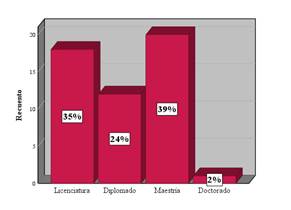
According to Figure 37, 35% of respondents from the
business sector consider that a bachelor's degree is sufficient, while 24%
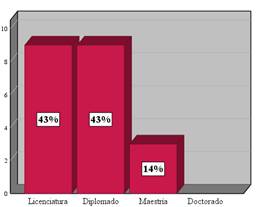
believe that a diploma would be ideal. According to Figure 38, Results of the
Banking Sector, 43% of respondents consider that a bachelor's degree and a
diploma respectively are convenient, while 14% believe that a master's degree in
the area is the optimal choice.
|
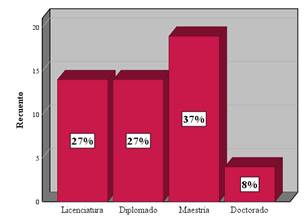
Figure 39
Academic Level - Financial and Accounting Administrator
Source:
Own elaboration (2024)
|
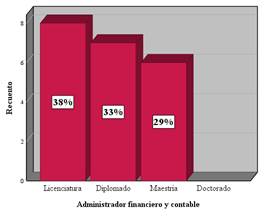
Figure 40
Academic Level - Financial and Accounting Administrator
Source:
Own elaboration (2024)
|
According to Figure 39, 27% of the entrepreneurs surveyed
consider that a bachelor's degree is suitable, while 27% believe that a diploma
is a better option. According to Figure 40, the results of the banking sector,
38% of those surveyed consider that a bachelor's degree is convenient, while
33% believe that a diploma is another alternative.
|
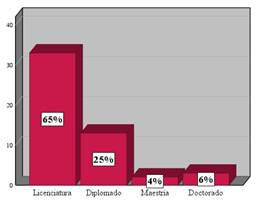
Figure
41
Academic level – Treasury – Entrepreneurs
Source:
Own elaboration (2024)
|
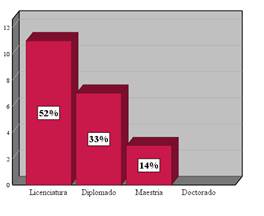
Figure 42
Academic level – Treasury - Banking
Source:
Own elaboration (2024)
|
The results in Figure 41 show that 65% of the employers
consider that a bachelor's degree is sufficient for the position of Treasurer,
25% believe that it would be preferable to have a diploma, 6% state that a
doctorate would be a suitable alternative. According to Figure 42, the opinion
of the Banking sector, 52% of those surveyed consider that having a bachelor's
degree is sufficient for the position, while 33% believe that it would be
preferable to have a diploma.
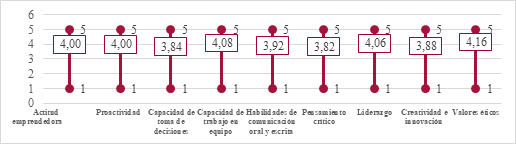
Figure
43
From your experience you are asked to qualify the soft
skills of engineers - Entrepreneurs
Source:
Own elaboration (2024). The chart was obtained and presented in their native
language (Spanish).
From the point of view of entrepreneurs, the soft skills
most requested by the business side are ethical values, leadership and
teamwork.
Figure
44
From your experience you are asked to rate the skills of
the engineers - Banking
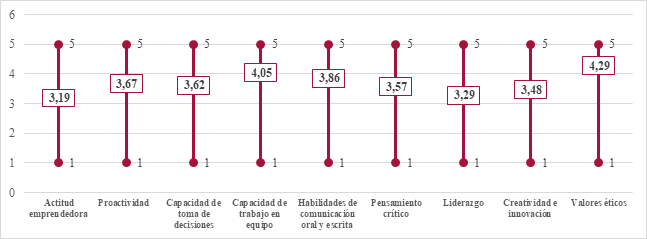
Source:
Own elaboration (2024). The chart was obtained and presented in their native
language (Spanish).
The soft skills most appreciated by banks are: Ethical
values, oral and written communication skills and proactivity. Regarding the
evaluation of the soft skills of Financial Engineers, it is observed that
entrepreneurs rate them on average as important. Skills such as ethical values,
teamwork skills, oral and written communication skills, proactivity, critical
thinking, creativity and innovation, leadership, and entrepreneurial attitude
are especially highlighted.Top of the form
|
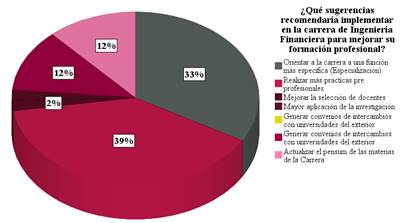
Figure 45
Suggestions - Entrepreneurs
Source:
Own elaboration (2024)
|
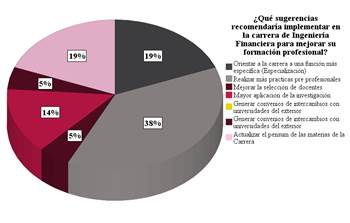
Figure 46
Tips - Banking
Source:
Own elaboration (2024)
|
In Figure 45, 39% of the employers suggest that graduate or
graduate students carry out more pre-professional internships, while 33%
believe that universities should orient the career to a more specific function,
12% indicate that they should generate exchange agreements and update the
curriculum of the career respectively.
In Figure 46, 38% of the banking sector suggest that
graduate or graduate students carry out more pre-professional internships,
while 19% believe that universities should orient the career to a more specific
function and update the curriculum of the subjects, 14% indicate that greater
application should be generated to research, 5% indicate improving the
selection of teachers and generating international agreements. Among the
suggestions, the contribution indicates that content should be updated based on
the FRM (Financial Risk Management) and CFA (Chartered Financial Analyst)
certifications stands out.
As for the current content
suggested by entrepreneurs, the highlighted competencies are: leadership
capacity, to lead teams and make strategic decisions, financial management
skills, efficient management of financial resources, software knowledge, data analysis,
languages, development of soft skills, management of updated information.
Respondents from the banking sector have identified a
series of fundamental contents that they consider crucial for a Financial
Engineer: financial risks, carrying out more professional internships,
introduction of applied econometrics subjects, development of critical
thinking, work organization methodologies, business intelligence, big data,
local regulations, CFA (Level 1 and 2) and FRM (Level 1). Preparation of
business plans.
Conclusions
For the research, they worked with private sector
companies, both corporate entities and financial intermediation companies, in
the city of Cochabamba Cercado, to obtain information, specifically from
high-ranking managers in the respective identities.
Regarding the evaluation of the soft skills of Financial
Engineers, it is observed that entrepreneurs rate them on average as important.
Skills such as ethical values, teamwork skills, oral and written communication
skills, proactivity, critical thinking, creativity and innovation, leadership,
and entrepreneurial attitude are among the main ones.
As for the analysis of hard skills, companies in the field
suggest the inclusion of specializations, additional courses, a more rigorous
selection process, and significant updates in the curriculum can improve the
skills and performance of professionals in Financial Engineering. Opinion
varies by job type. For managerial positions, a master's degree tends to be
required, while for more specific positions, such as analysts and sales
executives, a bachelor's degree or diploma may be sufficient.
Positions such as financial analyst, financial consulting
and administrator, and accounting are identified as the most demanded by
Financial Engineers. It is suggested that essential content should include
topics such as financial risks, applied econometrics, critical thinking, work
organization methodologies, Business Intelligence, Big Data, and content
related to certifications such as FRM and CFA.
References
Aloy, P. (2015). Método BAPNE realiza labor
social con adultos mayores en Venezuela. Venezuela Sinfónica.
Beaumont, P. H. (n.d.).
Financial engineering principles: A unified theory for financial product
analysis and valuation. J. Wiley & Sons.
Beder, T. S., &
Marshall, C. M. (2011). Financial engineering: The evolution of a profession. John Wiley & Sons.
Buxarais, M. (2013). Nuevos valores para una
nueva sociedad. Un cambio de paradigma en educación. Universitat de Barcelona.
dialnet.unirioja.es, 54-65. Recuperado de https://bit.ly/3viE07a
Centro de Estudios para el Desarrollo Laboral y
Agrario (CEDLA). (2010). Transformaciones del sector agropecuario y recursos
naturales en Bolivia. Recuperado de
http://biblioteca.clacso.edu.ar/Bolivia/cedla/20101109105059/AMBIENTAL.pdf.pdf
Cerrato Reyes, K. M., Argueta, L. R., &
Zavala, J. C. (2017). Determinantes de la empleabilidad en el mercado laboral.
Economía y Administración, 7(1), 21-40. https://doi.org/10.5377/eya.v7i1.4292
Cerrato, K. M., Argueta, L. R., & Zavala, J.
C. (2017). Determinantes de la empleabilidad en el mercado laboral. Economía y
Administración, 7(1), 21-40. Recuperado de
https://doi.org/10.5377/eya.v7i1.4292
Chiavenato, I. (2007). Administración de recursos
humanos (8th ed.). McGraw-Hill.
Coca, M. (2015). “Análisis de contexto para la
carrera de Ingeniería Comercial de la Universidad Católica San Pablo”. In:
Perspectivas.
Coca, M. (2015). Análisis de contexto para la
carrera de Ingeniería Comercial de la Universidad Católica San Pablo.
Perspectivas.
Contabilidad para Todos. (2021). Análisis
financiero en las empresas. Recuperado de
https://contabilidadparatodos.com/libro-analisis-financiero-en-las-empresas/
Dess, G. G., &
Lumpkin, G. T. (2020). Strategic management: Creating competitive advantages
(10th ed.). McGraw-Hill Education.
Dess, G. G., &
Lumpkin, G. T. (2020). Strategic Management: Creating Competitive Advantages
(10th ed.). McGraw-Hill Education.
Estatuto Orgánico Univalle. (2016). “Estatuto
orgánico” Cochabamba, Bolivia: Universidad del Valle.
Gitman, L. J. (2012). Principios de
administración financiera con CD. Pearson Education.
Ludeña, A. (2005). “La formación de competencias
laborales”. Perú: Caplab.
Ludeña, A. (2005). La formación de competencias
laborales. Caplab.
Nieto Ortiz, J. (2020). Análisis de las
competencias transversales en la formación profesional de Administración y
Finanzas desde la óptica de la empleabilidad en España. Avances en Supervisión
Educativa, (33). https://doi.org/10.23824/ase.v0i33.669
Nieto Ortiz, J., & Cacheiro González, M. L.
(2021). La evaluación de las competencias en la formación profesional desde un
enfoque basado en los resultados de aprendizaje. Revista Internacional de
Organizaciones, (27), 173-196. https://doi.org/10.17345/rio27.173-196
Paez Advincula Rafael Roosell (2018). Grado de
importancia de las finanzas y costos en el sector empresarial. Revista Industrial Data, 21(2),
https://doi.org/10.15381/idata.v21i2.15609
Ruiz, R. (2021,
October). Competencias
profesionales demandadas por el sector empresarial privado en el área de
marketing para la carrera de Ing. comercial de la Universidad del Valle
[Master's thesis]. Universidad Católica Boliviana, Cochabamba.
Tuning América Latina. (2007). “Reflexiones y
perspectivas de la Educación Superior en América Latina”.
Van Horne, J. C., & Wachowicz, J. M. (2010).
Fundamentos de administración financiera (13th ed.). Pearson Educación.
Zegarra, J. (2019). “Guía de plan de estudios”.
Perú: PUCP.
 https://orcid.org/0000-0002-1831-6631