Comparative Analysis of Moodle and Google Classroom in Music Theory Instruction
(es) Análisis comparativo de Moodle y Google Classroom en la enseñanza de la teoría musical
(port) Análise comparativa do Moodle e do Google Classroom no ensino de teoria musical
Ana Karem Díaz Orozco
Universidad Pedagógica Nacional
Unidad 142 Tlaquepaque
 https://orcid.org/0009-0003-4882-5343
Fernando Eduardo Martínez González
Universidad Pedagógica Nacional
Unidad 142 Tlaquepaque
fernando.martinez522@jaliscoedu.mx
https://orcid.org/0000-0002-5578-2922
Díaz-Orozco, A. K., & Martínez-González, F. E. (2025). Museum exposition Women in Art: gender equity and 8M commemoration. YUYAY: Estrategias, Metodologías & Didácticas Educativas, 5(2), 152-175. https://doi.org/10.59343/yuyay.v5i2.8m131
Recepción: 29-06-2025 / Aceptación: 26-08-2025 / Publicación: 30-09-2025

Compilatio Master+ IA Similarity
Abstract
In March of 2025 project “Museum Exposition Women in Art” was presented at Unit 142 Tlaquepaque of the National Pedagogic University as a part of the International Women’s Day commemorative event. The project’s objective was to create a museum experience in Unit 142 to bring visibility to the work and contributions of women to the arts, as well as to promote and raise awareness on gender equity. Methodology: Founded on a work of research and curatorship done by the students of the institution, an exposition of art was set up to focus on painting and music as the main artistic disciplines, with the intention of bringing about an inclusive dialogue that could sensitize the community, acknowledging and celebrating the talent of a diverse range of women artists from throughout history. The project considers Invisible Pedagogy and Critical Pedagogic Proposals as its main theoretical foundations, inviting the students to participate in community projects that promote the transformation of their educational environments, as well as the concept of an educational museum as a place to gather and learn. The conclusions and findings of this article describe the development of the project from a gender equity scope, and presents research upon its results, based on the established objectives and from the specific point of view of the students involved.
Keywords: Equity, 8M, community projects, artistic, formative practices.
Resumen
En marzo de 2025 se presentó el proyecto “Museo exposición Mujeres en el Arte”, en la Unidad 142 Tlaquepaque de la Universidad Pedagógica Nacional como parte del evento conmemorativo del Día Internacional de la Mujer. El objetivo del proyecto fue crear una experiencia museística en la Unidad 142 para visibilizar el trabajo y aportaciones de las mujeres en el ámbito artístico y fomentar la concientización sobre la equidad de género. Metodología: a partir de un trabajo de investigación y curaduría realizado por estudiantes de la institución, se montó una exposición de arte de las disciplinas de pintura y música con la intención de generar un diálogo inclusivo que pudiera sensibilizar a la comunidad, reconociendo y celebrando el talento de diversas artistas a través de la historia. El proyecto consideró las bases teóricas de pedagogías invisibles, propuesta pedagógica crítica que desde la educación artística invita a las y los estudiantes a ser partícipes en proyectos comunitarios que propicien la transformación de sus espacios educativos, así como el concepto de museos educativos como lugares de encuentro y aprendizaje. Las conclusiones y hallazgos del presente artículo describen el desarrollo del proyecto, desde un enfoque de equidad de género, y presenta una investigación sobre sus resultados con base en los objetivos establecidos y desde la percepción de las y los estudiantes involucrados.
Palabras clave: Equidad, 8M, proyectos comunitarios, artísticos, prácticas formativas.
Resumo
Em março de 2025, foi apresentado o projeto “Museu-Exposição Mulheres na Arte”, na Unidade 142 Tlaquepaque da Universidade Pedagógica Nacional, como parte das atividades comemorativas do Dia Internacional da Mulher. O objetivo consistiu em criar, nessa unidade, uma experiência museológica destinada a visibilizar o trabalho e as contribuições das mulheres no campo artístico e a promover a conscientização sobre a equidade de gênero. Metodologia: a partir de um trabalho de pesquisa e curadoria realizado por estudantes da instituição, foi montada uma exposição de arte nas disciplinas de pintura e música, com a intenção de gerar um diálogo inclusivo capaz de sensibilizar a comunidade, reconhecendo e celebrando o talento de diversas artistas ao longo da história. O projeto fundamentou-se nas bases teóricas das pedagogias invisíveis — proposta pedagógica crítica que, a partir da educação artística, convida estudantes a participar de projetos comunitários que promovam a transformação de seus espaços educativos — e no conceito de museus educativos como lugares de encontro e aprendizagem. As conclusões e os achados deste artigo descrevem o desenvolvimento do projeto sob uma perspectiva de equidade de gênero e apresentam uma investigação de seus resultados com base nos objetivos estabelecidos e nas percepções das/os estudantes envolvidas/os.
Palavras-chave: Equidade de gênero; 8M; projetos comunitários; artes; práticas formativas.
Author Notes:
The authors declare no competing interests
A written informed consent was obtained from all the participants, without no monetary compensation.
Notas de los autores:
Los autores declaran no tener conflictos de intereses.
Se obtuvo el consentimiento informado por escrito de todos los participantes, sin compensación económica alguna.
Notas dos autores:
Os autores declaram não haver conflitos de interesse.
O consentimento livre e esclarecido por escrito foi obtido de todos os participantes, sem qualquer compensação financeira.
Introduction
As part of the Institutional Development Plan of Unit 142 Tlaquepaque of the National Pedagogical University (UPN) in 2024, the Equity and Inclusion Commission emerges. During that year, the Commission carried out its first activities as part of a program to prevent and address gender-based violence. In July, the protocol for the prevention and attention of sexual harassment, sexual harassment, any other form of gender-based violence and discrimination was carried out, which aimed to establish specific measures to prevent sexual harassment and sexual harassment, any other form of gender-based violence and discrimination in Unit 142 of UPN and to promote an organizational culture based on gender equality and inclusion and freedom from discrimination, sexism, and violence in any of its forms (Díaz & Aguilar, 2024).
In August, the Commission invited the Secretariat for Substantive Equality between Women and Men (SISEMH) (n.d.) to give a workshop for the teaching staff of Unit 142 as part of the Continuing Education program. The workshop lasted 6 hours and its objective was to analyze the sociocultural structure to make visible the importance of incorporating the gender perspective and identifying the violence that arises in all areas of development (Díaz & Aguilar, 2024).
Subsequently, in September, and already at the beginning of the 2024-2 semester, members of the SISEMH offered a talk to the students in order to inform students about the various ways in which gender-based violence manifests itself and provide a critical perspective to the professional work of the degrees offered, in order to nurture a perspective that allows behavioral modifications aimed at a life free of violence for women. girls, adolescents and women in their diversity.
Finally, in October, a talk on masculinities was held for students with the aim of promoting non-violence and egalitarian relationships between women and men, as well as raising awareness about the cultural construction of masculinity. The National Pedagogical University, as a training institution for future education professionals, must promote gender equity and provide training spaces towards a culture of equity and inclusion. In congruence and follow-up to the work carried out during the year 2024, the commemorative event of International Women's Day merited developing a complete and integrating project. On the other hand, the development of artistic and cultural activities was considered as part of the event, which would also contribute to the cultural projects of Unit 142.
Theoretical framework
Concept of equity
The promotion of gender equity is based on understanding the concept of equity and its difference from the concept of equality, since both can be taken as synonyms. According to The National Sexual Violence Research Center (2020), while the term equality means giving everyone the same resources and opportunities, the concept of equity considers social injustices (2023). Thus, equity seeks to "reestablish justice in conditions of inequality, attending to satisfying conditions of diversity" (Campos Villalobos, 2005, as cited in Chaile, 2015)
On the other hand, the United Nations (UN, 2018) states that the meaning of gender equality does not mean that men and women should be treated as identical, the essential thing is that they have the same access to opportunities and the validation of their rights does not depend on the sex of the people. Equal opportunities must be recognized and applied in women's rights. (p.6)
Antolín (2003, p. 24, as cited in Brown & Soto, 2007) points out that the term gender refers to a social construction of the feminine and the masculine manifested in a set of learned behaviors, distribution of roles and functions between women and men and the relations of power and subordination between them, determined by culture and social contexts. political and economic aspects and not by biological aspects (p. 35).
Araya (2003, p. 18, as cited in Brown & Soto, 2007) points out that achieving equity requires "the transformation of gender, until its disappearance, through the fusion of values, attitudes, and practices historically attributable to women and men" (p. 37).
Gender equity refers to equal opportunities for both women and men by eliminating all forms of discrimination (State Population Council, Government of the State of Mexico, 2015). Equity recognizes, on the one hand, that we are all different in terms of sex, marital status, profession, religion, and ability, but that we are also equal as human beings with the same rights and obligations (p. 5).
From the educational field, the promotion of gender equity can be applied to the contexts of Latin American education systems. Valenzuela and Gómez (1999, as cited in Brown & Soto, 2007) propose, as part of the study of the history of Latin American countries, to make visible and value the lives and personalities of women who have struggled to forge new horizons for women throughout the region (p. 38).
International Women's Day and Museum Project Women in Art Exhibition
One of the most important events in the fight for gender equality is International Women's Day, 8M, which is commemorated every March 8. Luque (2019) mentions that public space has been related to work done by men, while activities in private space have been associated with women, who, from the feminist movement, have been able to appropriate public space to assert their rights. Every March 8, the struggle for gender equality takes place and women take to the streets to demand their rights, as well as to manifest the violence they experience every day and the inequalities in the different spheres of their lives (National Human Rights Commission, 2005, p.1). The first commemoration of Women's Day took place on February 28, 1909 in the United States, where women workers in a textile factory began a strike demanding a job with better working conditions, rights in the workplace and fair wages (National Human Rights Commission, 2025, p.2-3).
The National Pedagogical University, as a training institution for future education professionals, must promote gender equity and provide training spaces towards a culture of equity and inclusion. In congruence and follow-up to the work carried out during the year 2024, the commemorative event of International Women's Day merited developing a complete and integrating project. On the other hand, the development of artistic and cultural activities was considered as part of the event, which would also contribute to the cultural projects of Unit 142.
At the beginning of January 2025, the Equity and Inclusion Commission began working on the proposal for the "Women in Art Museum Exhibition" project, as part of the activities of the commemorative event for International Women's Day. In the search to generate an inclusive dialogue that could raise awareness in the community, it was proposed to mount an artistic exhibition that could recognize and celebrate the talent of various artists throughout history. The general objective was to create a museum experience to make visible the work and contributions of women in the artistic field and to promote awareness of gender equality. The exhibition would be carried out by the students themselves, actively involved in a project with a community and collaborative approach. The project is theoretically based on the pedagogical proposal of Invisible Pedagogies and on the museological perspective of making use of museums as educational spaces.
Invisible pedagogies and educational museums
Art as an element of sensitization and awareness within a socio-critical approach communes with Invisible Pedagogies, a pedagogical proposal that was born from art education and is part of a hybrid between semiotics and pedagogy. For Acaso (2018, p. 20), semiotic processes, which are agreed upon in the arts, must be established in everyday life and in any field of study, inviting reflection and analysis on the uses of visual language. Based on critical reflection on hidden discourses, direct educational actors act as social agents who seek to "transform reality through semiotic actions" (Acaso, 2018, p. 21). The proposal goes beyond a critical pedagogy: it is not only a matter of identifying what is wrong, it seeks to open hopeful and transformative paths (Acaso, 2018. p. 81).
The first premise of Invisible Pedagogies is "to incorporate the processes of analysis as a fundamental part of art education, in particular, and of education, in general" (Acaso, 2012, p. 60). Art and artistic projects are transformative elements that allow us to look at realities in a reflective and analytical way. From the approach of regenerative pedagogy, the actions that are generated from community projects based on critical reflection can be agents of change and transformation.
The importance of museums and community contexts in Invisible Pedagogies as areas of study (Acaso, 2018, p. 19), leads us to consider in this theoretical framework the pedagogical perspective of museums and its relationship with semiotics and museology. Museums as educational spaces are considered by the new museology as places of meeting and learning where the population knows and discovers its identity and assumes it responsibly (Hernández, 2006, p. 169 as cited in Rabazas & Ramos, 2017, p. 102). For Álvarez and Payá (2015, as cited in Rabazas & Ramos, 2017, p. 105) "university pedagogical museums are presented as an essential instrument for the historical-educational reconstruction of our school memory". The museum can be conceived as a resource for teaching and research and as part of the training of future teachers and pedagogues (2015, as cited in Rabazas & Ramos, 2017, p. 105).
In addition to making visible the work of women in the artistic field, and raising awareness in the community about gender equality and the 8M movement, the project was also presented as a training experience for students which could contribute to their development of research skills, which is why it was decided that the exhibition should be supported by curatorial work.
Within museums and in the assembly of art exhibitions, the figure of the curator is present, who is the researcher who knows and studies the topics and materials, applying the knowledge of his or her specialty, thus contributing to the conservation and dissemination of these topics and materials (Mosco, 2016, p. 75). Its activities consist of both the organization, control and management of the pieces that make up the collections and their study, identification and classification in order to know and interpret their meaning. The curator systematizes and shapes the thematic and material contents of the exhibitions and is in charge of the care of the exhibition (Mosco, 2016, p. 75).
According to Betancur (2016, p. 22), curating, from a museopedagogical perspective, is to make a reading and a rereading of the meaning offered by objects, in this case works of art, to reconstruct their context and give them validity for the present. To curate is to "potentiate the semantic character of the collections, always respecting the objectives of the exhibition and its thematic nuclei and guidelines of both a previous museological curatorial script and the policies of the museum institution" (2016, p. 22).
Through a curatorial experience, students could become directly involved in the project and be part of the process of elaboration and design of the exhibition. In order to generate this space, Fernando Saúl Pérez Cisneros, an eighth-semester student of the bachelor’s degree in art history at the University Center of Tonalá (CUTONALA) of the University of Guadalajara (UDG) was invited to serve as an advisor to the participants in the curatorial process.
Project development
At the end of January 2025, a call was launched at Unit 142 Tlaquepaque UPN in which the university community was invited to participate in the "Women in Art Exhibition Museum" project. At the beginning of February, work began with two groups made up of students. On the one hand, the research and curatorship team is formed with 11 students, who, under the advice and accompaniment of Fernando Saúl Pérez Cisneros, carried out the curatorial work in extracurricular sessions on Thursdays in the library of Unit 142. A second work team was formed with 8 students who worked on the collection of materials and assembly work, having a total of 19 students in both teams.
Starting from the main theme of presenting works of art made by women, the research and curatorial team made the decision in group consensus not to limit the exhibition to a specific historical period or to a particular artistic current or movement, instead, the thematic line would be, on the one hand, works by women artists whose work has not been fully recognized, and, on the other hand, the search for representative works on the role of women in art and the contexts in which they developed their work.
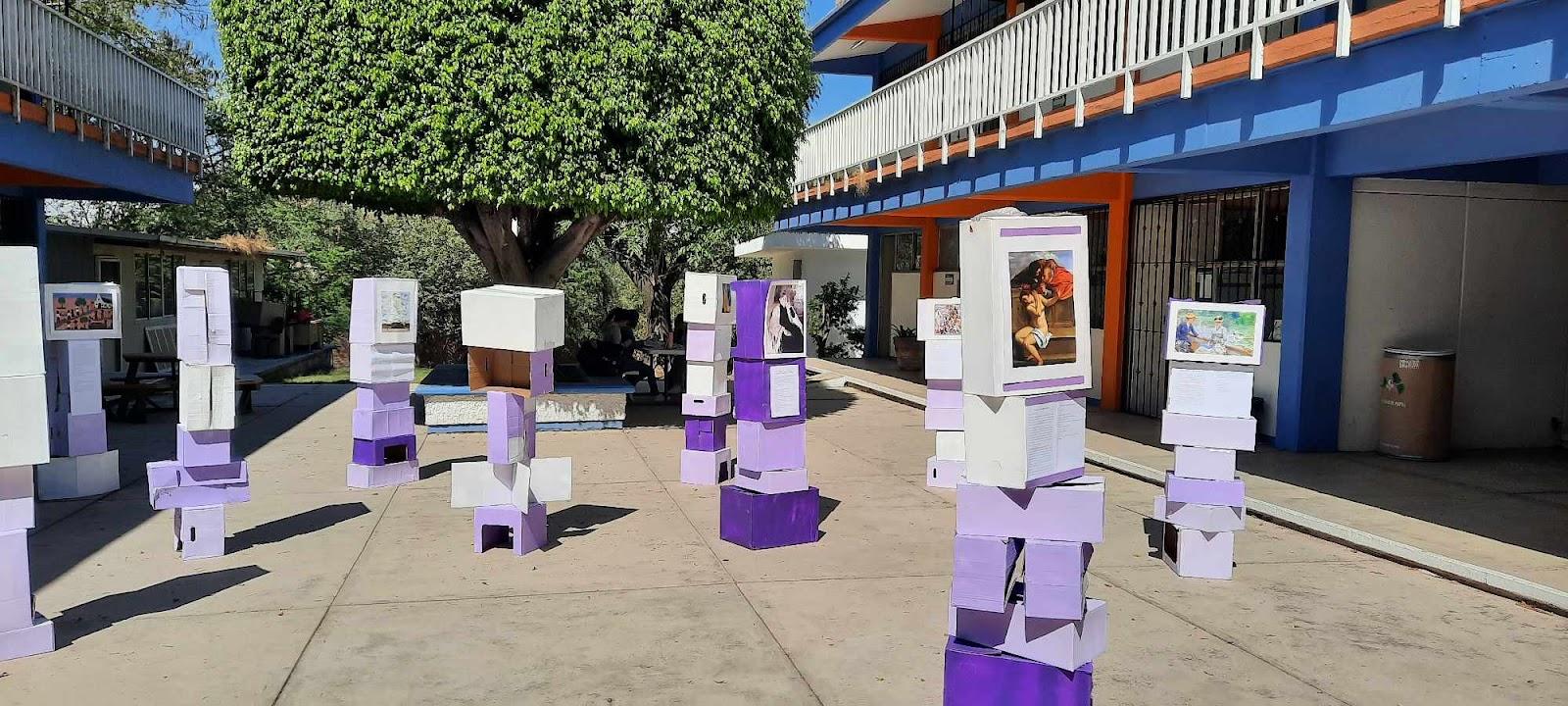
As part of the established delimitations, it was determined to present the exhibition in two rooms: the first, called the Visual Room, would consist of the exhibition of reproductions of pictorial works and the second, the Sound Room, both rooms would present the selection of the works derived from the curatorial work. The concept of each room also allowed for creative ideas on how the works would be mounted. On the one hand, the Visual Room would be mounted in the main courtyard of the Unit, an open-air space and central point between most of the institution's classrooms, where the works would be mounted on structures made of recycled cardboard boxes, which would later be painted in different shades of purple, a color representative of the 8M movement. On the other hand, the Sala Sonora also presented an innovative proposal making use of community spaces: in the library of the Unit, a decorated and conditioned space was set up for the reproduction of musical works from a Spotify playlist and a video with audiovisual content, which were played throughout the day
Another of the activities developed was the Commemorative Mural, which consisted of the installation of a canvas in one of the corridors of the central courtyard, where the community (including administrative, support and teaching staff) was invited to write on a purple piece of paper the name of a woman they admired and why. Later, this paper was pasted on the canvas, managing to place more than 100, most of the population described his mother as one of the most admirable women in his life, mentioning her strength, support and unconditional love. Others referenced their grandmothers as primary caregivers, and last but not least, mention was made of celebrated women.
In addition to the Women in Art project and the Commemorative Mural, on the day of the event, various workshops were offered with topics related to the objective of the project and the commemoration of 8M. In total, 6 workshops were offered, of which 2 of them were taught by students, likewise, a talk "women's health" and a discussion "the role of men in International Women's Day" were offered, both given by experts.
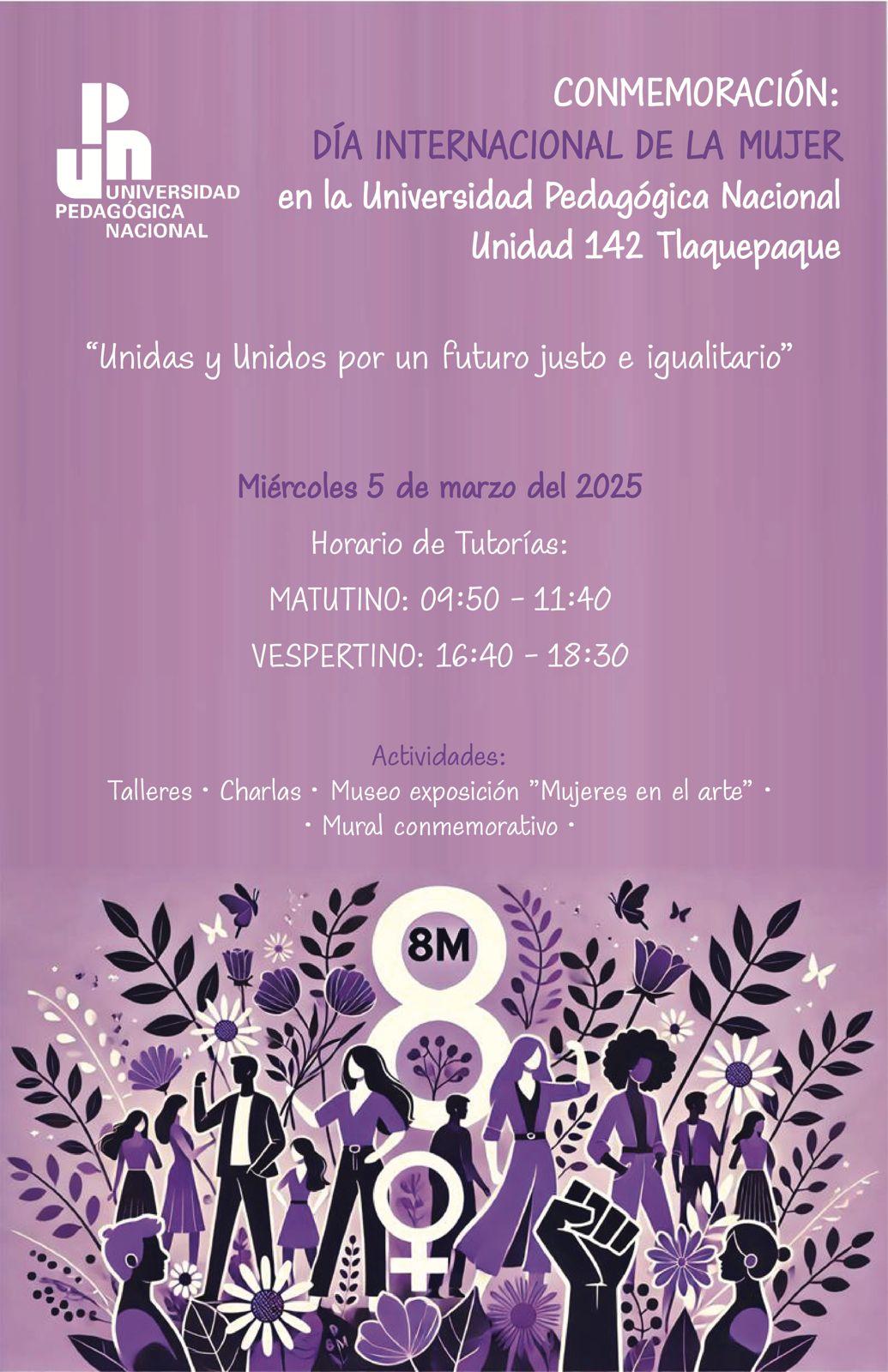
Under the slogan "United and united for a just and equal future", the commemorative event of International Women's Day was held on March 5. All the activities (museum, mural and workshops) were developed during the event, marking a milestone in the history within Unit 142 of UPN as it was the first year in which a great commemorative event of 8M was held.
Figure 1
Event Promotional Poster
Source: UPN 142 Tlaquepaque Facebook page
Figure 2
Visual
Room
Source: Photograph taken by Díaz (2025)
Figure 3
Sound
Room
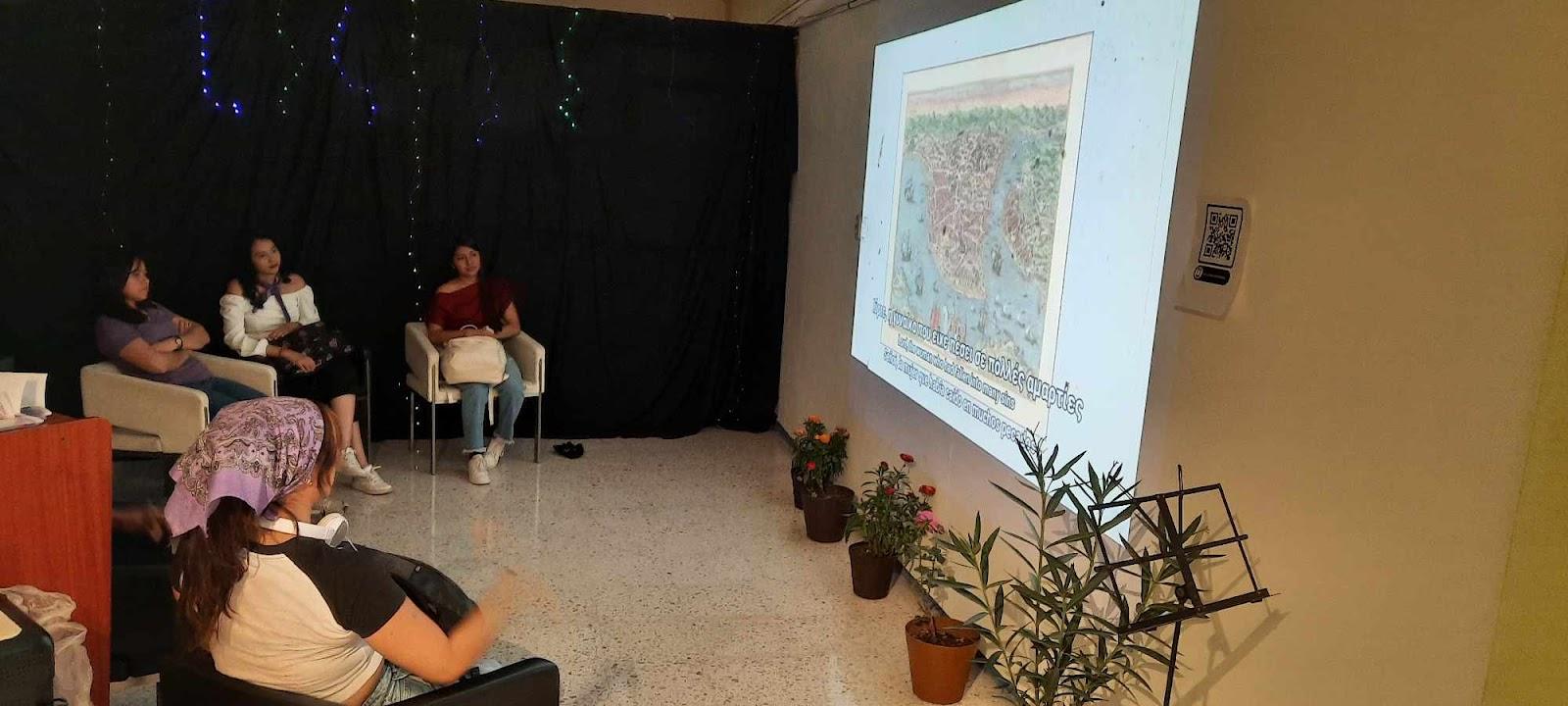
Source: Photograph taken by Díaz (2025)
Figure 4
Memorial
Mural
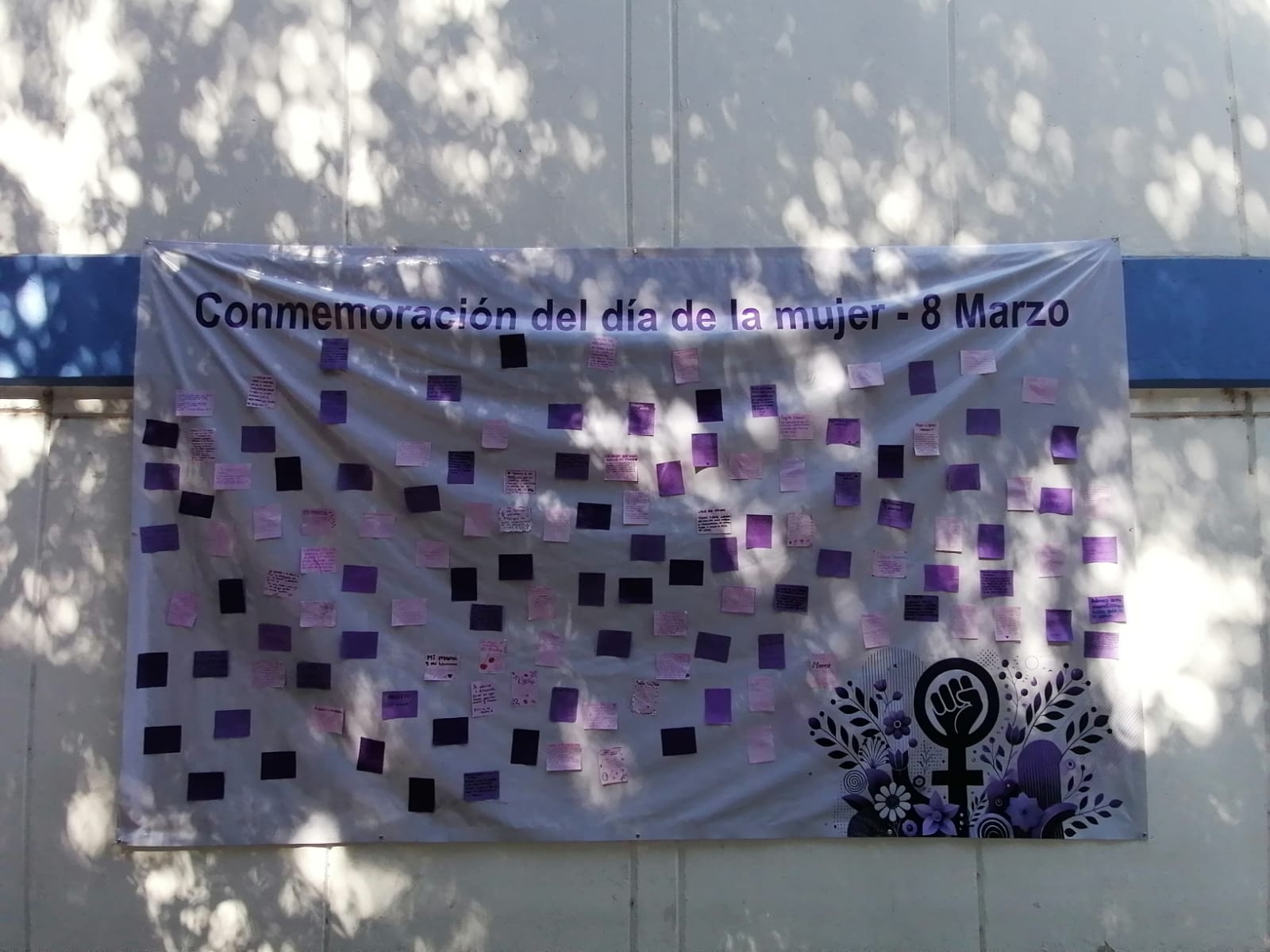
Source: Photograph taken by Díaz (2025)
Methodology:
As part of the closing activities of the project, an interpretative research with a qualitative approach was carried out in which it was sought to know the impact of the project on the participants from their own experience.
The information was obtained through a questionnaire developed in the Google Forms tool, which consisted of 15 questions formulated from criteria established based on the objectives of the project and its theoretical and conceptual references: gender equality and commemoration of International Women's Day, personal and academic learning, artistic projects as transformative proposals and community projects.
The questionnaire was sent to the 19 students who participated in both the research and assembly teams, obtaining the response of 17 of them, which is within the confidence level of the sample.
Based on the answers obtained and their interpretation, 11 of them were selected, from which the following categories of analysis were established:
· Knowledge and perceptions on gender equality and the Commemoration of International Women's Day.
· Impact and lessons learned.
· Impact of the project on the community.
· Incorporation of art in community projects.
Results
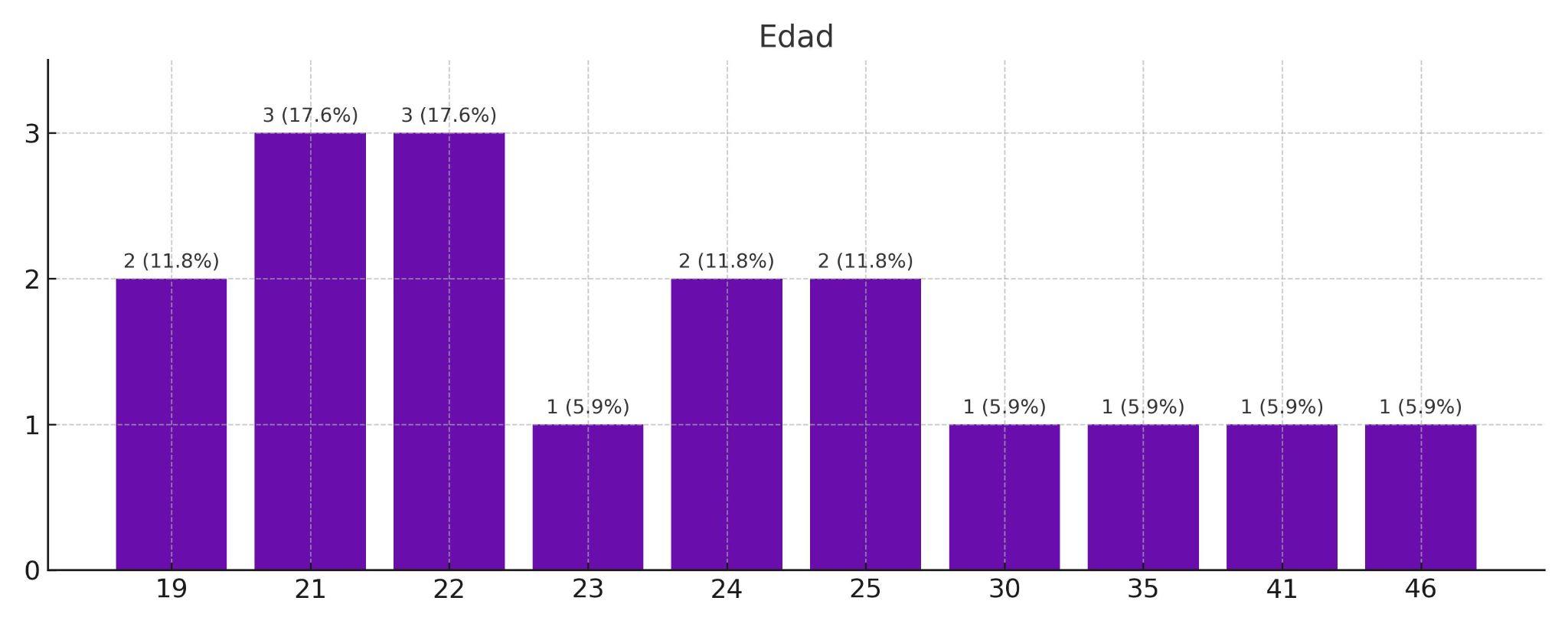
Prior to the 15 main questions, the questionnaire presented three questions to find out general information about the participants: age, gender with which they identify and the career they study.
Figure 5
Questionnaire
Question 1: Age
 Source:
Own elaboration
Source:
Own elaboration
Figure 6
Questionnaire question 2: Gender
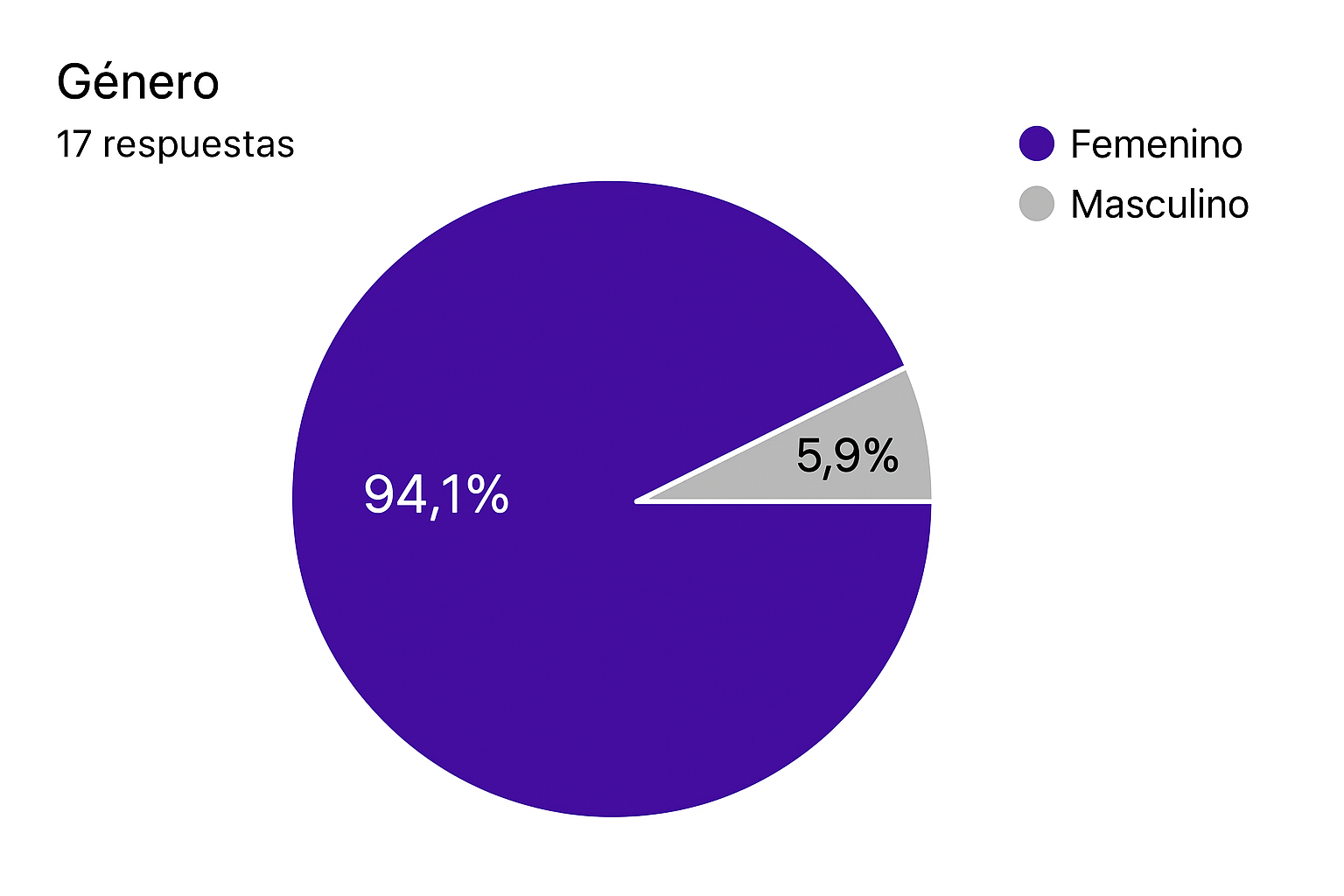
Fountain. Own elaboration
Figure 7
Quiz Question 3: Career
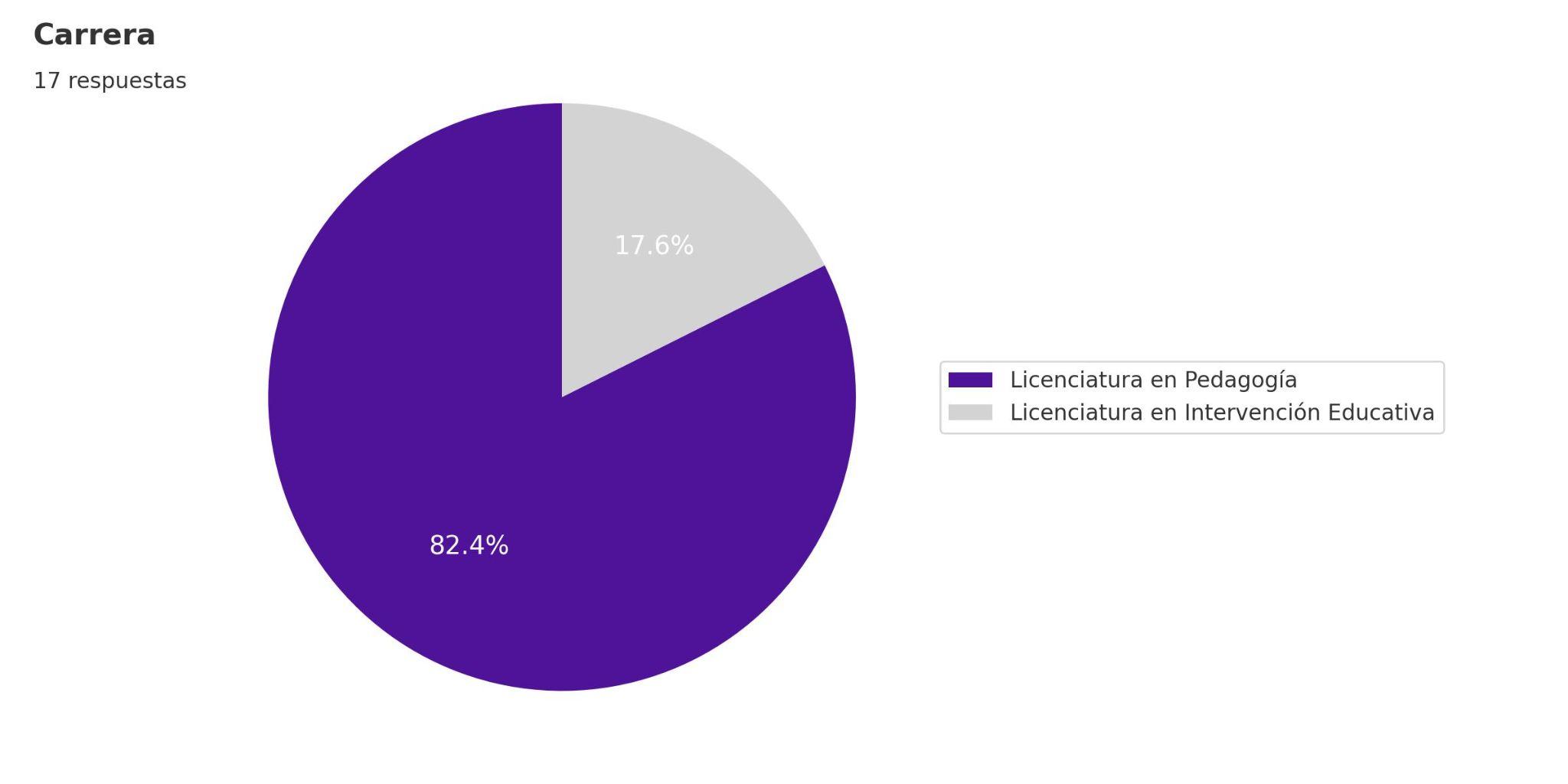
Fountain. Own elaboration.
According to the results of this series of questions, the age range of the participants goes from 19 to 46 years old. 94.1% of the people who answered the questionnaire identified with the female gender and only 5.9% with the male gender. 82% answered that they are students of the bachelor’s degree in Pedagogy and 17.6% of the Bachelor's Degree in Educational Intervention.
Below are the results of the top 15 questions based on the established analysis categories:
a. Knowledge and perceptions on gender equality and the commemoration of International Women's Day
This category is derived from the following questions: Did you have knowledge about gender equality and the commemoration of International Women's Day before participating in the project? How did your ideas and perceptions about gender equality and the commemoration of International Women's Day change after the event?
The answers to the first question can be represented quantitatively:
Figure 8
Knowledge about gender equality and the commemoration of International Women's Day
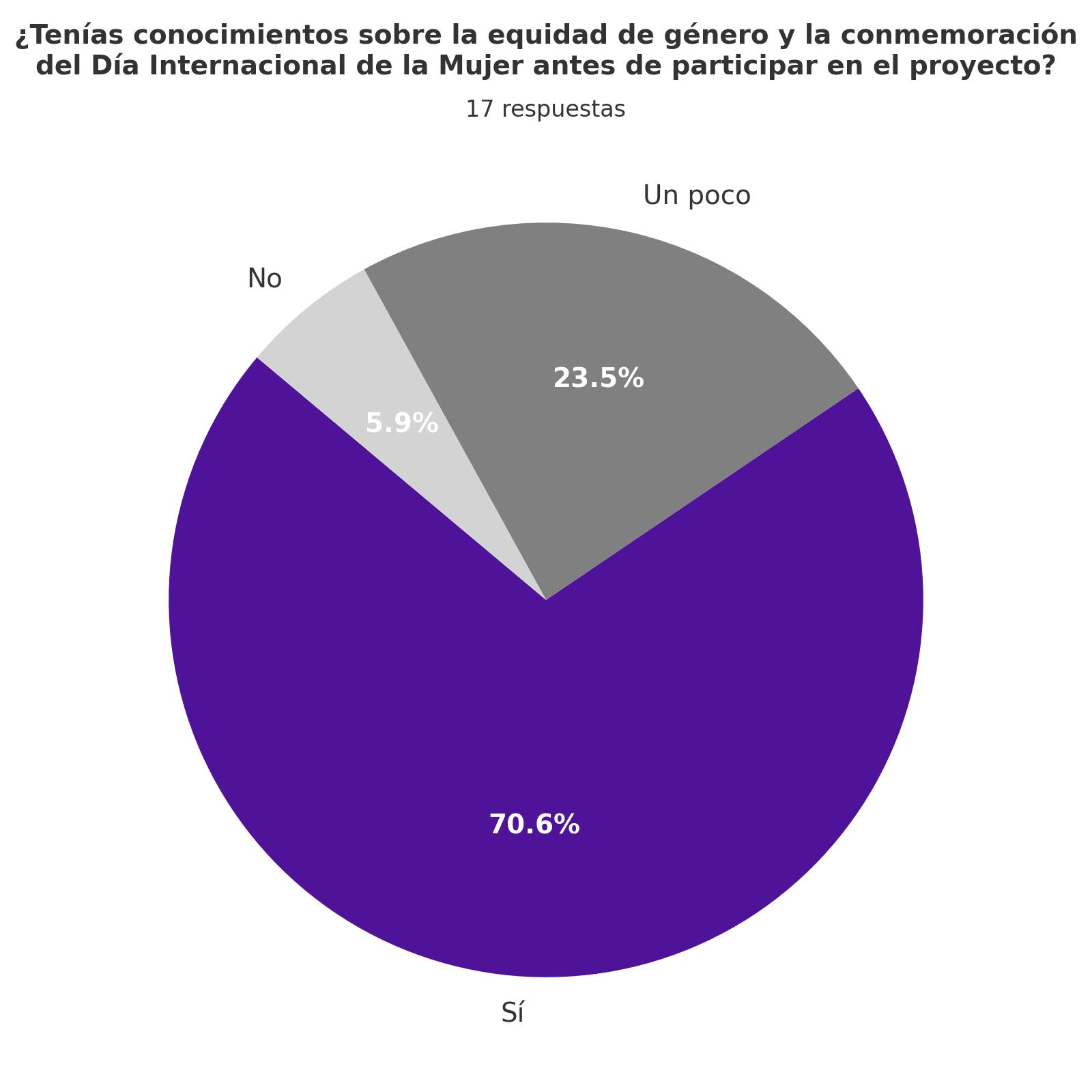
Fountain. Own elaboration. Note: 70.6% answered that they already had previous knowledge, 23.5% a little and 5.9% did not.
The following table summarizes the results of the question How did your ideas and perceptions about gender equality and the commemoration of International Women's Day change after the event?, from their respective category.
Table 1
Results
of the question on knowledge and perceptions about gender equality and the
commemoration of International Women's Day
|
Question |
Results |
|
How did your ideas and perceptions about gender equality and the commemoration of International Women's Day change after the event?
|
· To see the commemoration not as a celebration, nor as a symbolic day, but as a movement of consciousness and transformation. · It generated reflection and social commitment. · Visibility and recognition of women. · Recognition of inequality between men and women. · Clarity in the concept of equity and meaning of the commemoration. · To know different perspectives through socialization. · Empathize with women. |
Source: Authors.
The category "Impact and learning acquired" includes the following questions: What impact did the project have on you personally? What lessons did the project leave you? What did you learn about the role of women in art from your research work? The following table presents the overall results of the category.
Table 2
Results
of the category "Impact and lessons learned"
|
Category |
Results |
|
Impact and lessons learned |
· Connect-know with stories, realities and struggles. · To question my own thoughts and ideas. · It awakened greater empathy, social responsibility and commitment to change. · Motivation to continue learning and acting in favor of the 8M movement. · Knowledge about the concept of gender equity. · Meaning of 8M. · Not normalizing violence or machismo, or inequality. · Act with empathy and respect. · Strengthen social awareness. · Collaborative work and dialogue. · Learn about the work of women artists. · Concept and curatorial process. · Little visibility of women in art. · Social and cultural barriers due to gender. · Contributions of women in art. · Recognition of women's artistic work. |
Source: Authors.
b. Below are some responses from the students that summarize the results obtained in the category
(03M8) "In a personal way I was able to explain to my children, more about the subject, and how important it is for them to know about the subject, being men, I have always made clear the respect that should be had for women and the support that should be egalitarian."
(07M8) "First, I understood more deeply what gender equity really means: it's not about us all being equal but about recognizing our differences and ensuring the same opportunities and rights for all people, especially women who have historically been marginalized." I also learned that International Women's Day is not a commercial or superficial celebration, but a date of struggle, memory and vindication of rights. In addition, the project taught me the importance of raising my voice, of not normalizing violence or machismo, and of acting with empathy and respect from everyday life. It was an experience that strengthened my social conscience and my desire to be part of the change."
Within the category, the question was also contemplated: How could you apply what you have learned in your future professional practice?
Table 3
Results of the question on the application of what has been learned in future teaching practice
|
Question |
Results |
|
How could you apply what you have learned in your future professional practice?
|
· Generate inclusive and safe spaces and promote respect and equity. · Generate environments without stereotypes or gender roles. · To make visible the role of women in academic content. · Inform and raise awareness about the 8M movement. · Create artistic projects in professional practice. · Development of research skills. |
Source: Authors.
c. Among the answers of the students who stand out in this category are the following:
(10M8) "I could apply what I have learned by promoting an environment where girls and boys feel equally free to express themselves, participate and develop without stereotypes or imposed gender roles. I will also try to make visible the role of women in academic content, include female references in different areas of knowledge and promote mutual respect at all times".
(11M8) "Perhaps in the future I can make a type of museum for the school I work with and talk to my students about the commemoration of Women's Day from a different perspective than the one I had before participating in this project, and be able to have the basis to say that it is not just any day."
Also within the category is the question What emotions arose in you when presenting the work of women artists?, the results of which are presented in the following graph:
Figure 9
Emotions
that arose when presenting the work
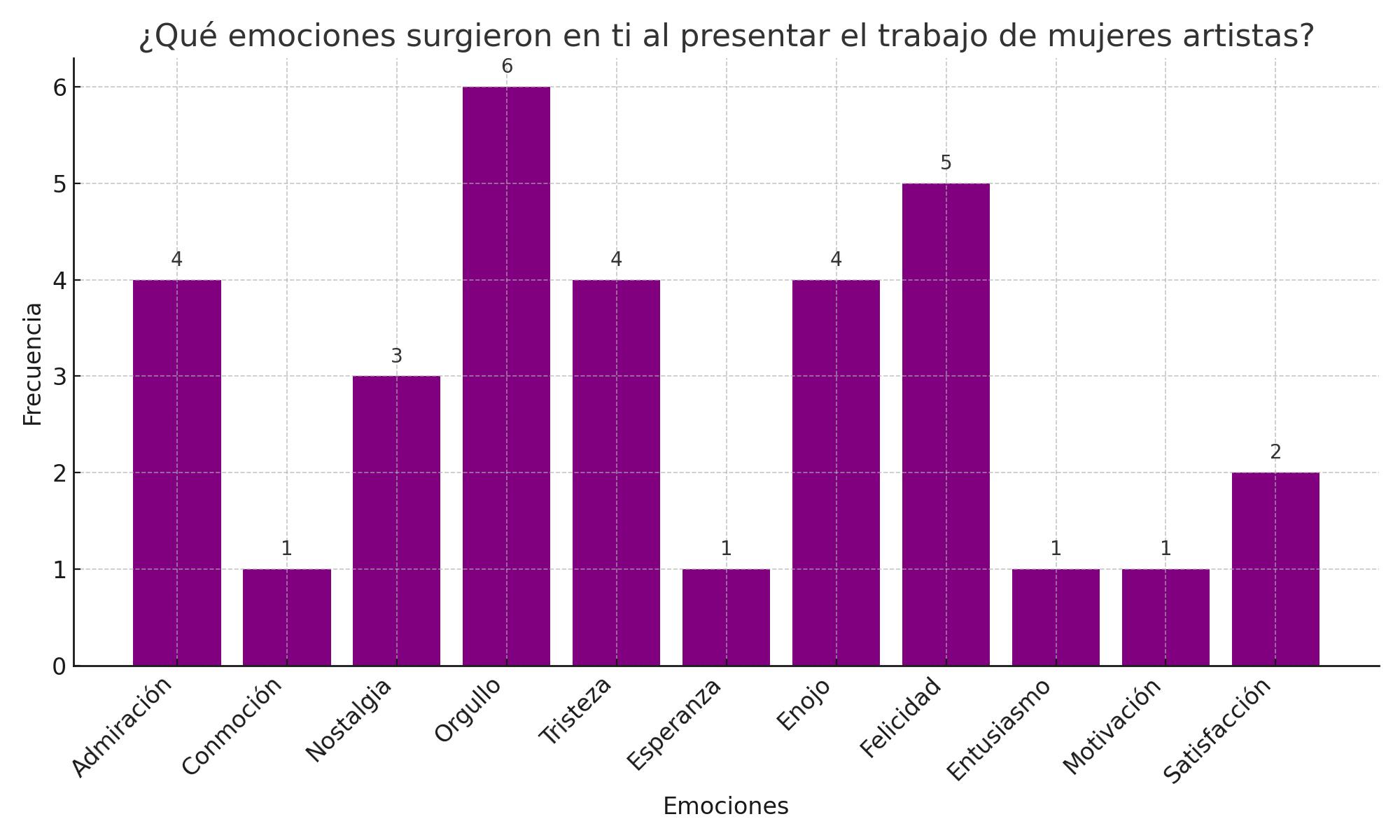
Source: Authors.
In the category "Impact of the project on the community", the following questions were considered: How do you think the project impacted the university community? Based on experience, how can the university community be involved in community projects? The tabulated results are presented below:
Table 4
Results
of the category "Impact of the project on the community"
|
Category |
Results |
|
Impact of the project on the community |
· Positive impact. · Spaces for dialogue, reflection and awareness about gender inequality. · Activities that involved the entire community. · Promotion of collaborative work. · Community awareness. · Coexistence from the gender perspective. · Innovative projects. · Generation of spaces for active participation. · Involve the community, make it participate. · Take into account the opinions and ideas of the community. · Promotion of collaborative work. · Greater dissemination of the projects. |
Source: Own elaboration
d. Some of the answers given by the students were the following:
(13M8) "The project had a very positive impact on the university community, as it generated spaces for dialogue, reflection and awareness about a problem that is often normalized or avoided: gender inequality. Through the activities carried out, a culture of respect, inclusion and empathy was promoted among students."
(14M8) "From my experience, one of the most effective ways to involve the university community in community projects is by generating spaces for active and meaningful participation, where students, faculty, and staff feel heard and part of the change. When a project touches on issues that connect with reality, such as gender equality, and is developed with empathy, creativity and social commitment, it is easier to arouse interest and collaboration."
Finally, the results of the category "Incorporation of art in community projects" are shared, where the questions "What do you think of incorporating artistic activities in community projects?" and "Do you think that artistic activities can help sensitize and raise awareness in the community?" are present. Why?
The students considered it a good idea to incorporate artistic activities into community projects. Among the answers we find the following:
(15M8) "I think it is a very assertive idea, since artistic expressions such as music, theater, painting, dance, poetry or photography allow social problems to be made visible in a closer, more sensitive and empathetic way."
(16M8) "It is necessary to achieve a comprehensive education, through art experiences are visualized and shared that help to maintain group or community cohesion."
(17M8) "It's super good, because art makes you feel, think and connect in a different way. Sometimes it says more than words."
In the second question, a resounding yes was obtained as an answer from all the participants. The results can be summarized in that art is a means of expression of ideas, feelings, a means to involve the community and achieve coexistence.
Conclusion
The conclusions reached in this research demonstrate the achievement of the objectives set. The proposal to hold an art exhibition within the commemorative event of International Women's Day was carried out based on what was planned and, like the rest of the activities of the event, in accordance with the objectives set by the Equity and Inclusion Commission.
From the students' perception, greater awareness of gender equality can be identified from the development of the project, as well as more clarity and knowledge about the 8M movement and the meaning of the commemoration of International Women's Day. The work carried out allowed them to empathize with the movement by sharing and connecting with different stories coupled with the emotions that the experience generated in them.
The integration of artistic activities was part of the innovative elements of the project. Based on the experience, the students recognize that art is a means of sensitization and awareness that allows them to recognize diverse realities from a socio-critical and emancipatory perspective. In addition, the project helped to strengthen the research skills of students from a reflective perspective in favor of transformative actions that contribute to their personal, academic and professional practice. The museum experience achieved the visualization of the work done by women artists throughout history, as well as showing the difficulties they had in the appropriation of their works.
The theoretical basis of Invisible Pedagogies is the basis of the proposal, which, when put into practice, presents evidence of artistic projects that generate spaces for reflection that invite the community to participate and get involved in issues of great social importance, and also to question social practices from propositional actions. The concept of an educational museum materialized in the experience of the "Women in Art Exhibition Museum" project, where students were able to get closer to the arts and learn more about artistic and cultural references, and in a conscious stance on gender equality.
The work carried out by the Equity and Inclusion Commission of Unit 142 of UPN was consolidated with the commemorative event and all the activities carried out, opening the way to more proposals from the gender perspective and establishing the commemoration of International Women's Day as part of the major integrating events of UPN Tlaquepaque to be held each year.
References
Acaso, M. (2018). Pedagogías invisibles: El espacio del aula como discurso. Los Libros de la Catarata.
Archivo General de la Nación. (s. f.). AGN resguarda el legado femenino de las artes y la ciencia de la primera mitad del siglo XX [Comunicado].
Betancur, F. R. (2015). El rol del curador en el museo frente al arte contemporáneo y las nuevas tecnologías. Artes, la Revista, 14(21), 18–36.
Brown, L. C., & Soto, H. W. (2007). Reflexiones sobre equidad de género y educación inicial. InterSedes, 8(14).
Chaile, M. O. (2015). Igualdad, equidad y diferencia: Análisis de categorías conceptuales que fundamentan la revisión del ingreso universitario. Hachetetepé. Revista Científica de Educación y Comunicación, (10), 33–46.
Comisión Nacional de los Derechos Humanos. (2025, 8 de marzo). Día Internacional de la Mujer: Lucha por la igualdad, el reconocimiento y el ejercicio efectivo de sus derechos [PDF]. https://www.cndh.org.mx/sites/default/files/documentos/2025-03/FRI_MAR_08-1.pdf
Comisión Nacional para la Mejora Continua de la Educación. (2023, 15 de noviembre). La igualdad de género debe estar en el epicentro de la educación obligatoria [Comunicado]. Recuperado el 30 de junio de 2025, de https://www.gob.mx/mejoredu/prensa/la-igualdad-de-genero-debe-estar-en-el-epicentro-de-la-educacion-obligatoria-351594
Consejo Estatal de Población del Estado de México. (2015). Equidad de género [Folleto]. Gobierno del Estado de México. https://coespo.edomex.gob.mx/sites/coespo.edomex.gob.mx/files/files/equidad_de_genero_15.pdf Díaz, A. K., & Aguilar, A. (2024). Impulso a la prevención y atención de la violencia de género [Reporte no publicado]. Universidad Pedagógica Nacional, Unidad 142 Tlaquepaque.
Gobierno de México (Instituto Nacional de las Mujeres), & ONU Mujeres México. (2015). La igualdad de género [Folleto]. ONU Mujeres México.
Instituto Nacional de las Mujeres. (s. f.). Equidad. En Glosario para la igualdad. Recuperado el 30 de junio de 2025, de https://campusgenero.inmujeres.gob.mx/glosario/terminos/equidad
Juárez Pérez, M., & Vázquez Arreola, J. M. (2022, 14 de febrero). Las mujeres en el arte y la cultura en México: Análisis y propuestas para el fortalecimiento de sus derechos [Informe]. Centro de Estudios Legislativos para la Igualdad de Género, Congreso de la Ciudad de México. https://genero.congresocdmx.gob.mx/wp-content/uploads/2022/03/CELIG_Estudio_mujeres_en_el_arte_y_la_cultura_en_Mexico.pdf
López Suárez, P. (2023, 14 de diciembre). Carecen metrópolis y espacios públicos de perspectiva de género. Gaceta UNAM. Recuperado el 30 de junio de 2025, de https://www.gaceta.unam.mx/carecen-metropolis-y-espacios-publicos-de-perspectiva-de-genero/
Luque Rodrigo, L. (2019). Arte y feminismo en el espacio público: De lo perdurable a lo efímero. Ejemplos del siglo XXI en España. Atrio, Monográfico 1, 55–65.
Mejía Jiménez, V. (2025, 6 de marzo). ¿Por qué conmemorar el 8 de marzo este 2025? Gaceta UNAM. Recuperado el 30 de junio de 2025, de https://www.gaceta.unam.mx/por-que-conmemorar-el-8-de-marzo-este-2025/
Mosco Jaimes, A. (2016). Sobre la curaduría y su papel en la divulgación. Intervención, 7(13), 74–79.
Museo Nacional de San Carlos. (2023, 18 de agosto). Pintar en femenino: Mujeres en el sistema artístico mexicano, 1846–1940. Homenaje a Leonor Cortina [Exposición]. Recuperado el 30 de junio de 2025, de https://mnsancarlos.inba.gob.mx/pintar-en-femenino-mujeres-en-el-sistema-artistico-mexicano
Naciones Unidas. (2025). Día Internacional de la Mujer. Recuperado el 30 de junio de 2025, de https://www.un.org/es/observances/womens-day
Pedagogías Invisibles. (2021). Pedagogías Invisibles: Proyectos de arte y educación. Recuperado el 30 de junio de 2025, de https://www.pedagogiasinvisibles.es/
Rabazas Romero, T., & Ramos Zamora, S. (2017). Los museos pedagógicos universitarios como espacios de memoria y educación. História da Educação, 21(53), 100–119.
Red de Centros de Justicia para las Mujeres. (s. f.). Red de Centros de Justicia para las Mujeres – Gobierno de Jalisco. Recuperado el 30 de junio de 2025, de https://redcjm.jalisco.gob.mx/
Secretaría de Educación, Ciencia, Tecnología e Innovación de la Ciudad de México. (2024, 4 de diciembre). Se avanza en la equidad de género en educación superior y CTI [Boletín]. Recuperado el 30 de junio de 2025, de https://www.sectei.cdmx.gob.mx/comunicacion/nota/se-avanza-en-la-equidad-de-genero-en-educacion-superior-y-cti
Secretaría de Igualdad Sustantiva entre Mujeres y Hombres. (s. f.). Secretaría de Igualdad Sustantiva entre Mujeres y Hombres – Gobierno de Jalisco. Recuperado el 30 de junio de 2025, de https://igualdad.jalisco.gob.mx/
Secretaría de Salud del Estado de México. (2023). Unidad de Igualdad de Género y Erradicación de la Violencia. Recuperado el 30 de junio de 2025, de https://salud.edomex.gob.mx/salud/ac_unidad_igualdad_genero
The National Sexual Violence Resource Center. (2020). NSVRC press kit [Folleto informativo]. Recuperado el 30 de junio de 2025, de https://www.nsvrc.org/sites/default/files/2020-09/NSVRC_Press_Kit.pdf
UN Women. (2024). ONU Mujeres. Recuperado el 30 de junio de 2025, de https://www.unwomen.org/es
UN Women. (2025). ¿Qué podemos hacer desde ya para que 2025 sea clave para el feminismo? Recuperado el 30 de junio de 2025, de https://www.unwomen.org/es/articulos/articulo-explicativo/que-podemos-hacer-desde-ya-para-que-2025-sea-clave-para-el-feminismo
Universidad Pedagógica Nacional. (s. f.). Universidad Pedagógica Nacional. Recuperado el 30 de junio de 2025, de http://www.upn.mx/
Universidad Pedagógica Nacional, Unidad 142 Tlaquepaque. (s. f.). Página oficial de Facebook [Página de Facebook]. Recuperado el 30 de junio de 2025, de https://www.facebook.com/UPNTlaquepaque/
Zavala, J. (2021). La mujer en el arte actual, en voz de expertas Tec. Conecta Tec, Tecnológico de Monterrey. Recuperado el 30 de junio de 2025, de https://conecta.tec.mx/es/noticias/estado-de-mexico/educacion/la-mujer-en-el-arte-actual-en-voz-de-expertas-tec