El presente estudio analiza los
efectos de una intervención pedagógica integrada orientada a mejorar el
desempeño lector de estudiantes de cuarto grado con bajo rendimiento académico
en el área de Lengua y Literatura. La investigación se desarrolló bajo el
enfoque de investigación-acción y se aplicó durante seis semanas en una
institución de educación básica de la ciudad de Quito, Ecuador. El ecosistema
pedagógico integró de manera sistemática la lectura dialógica, la enseñanza
recíproca, las estrategias lúdicas y el uso de recursos digitales. Se adoptó un
diseño cualitativo, no experimental, descriptivo y de corte transversal,
utilizando como técnicas la observación participante, entrevistas
semiestructuradas a docentes y registros de desempeño en el aula. El
rendimiento lector se evaluó mediante indicadores de fluidez, articulación,
entonación y motivación, analizados a través de un modelo gráfico de evolución
y una fórmula de variación porcentual. Los resultados evidenciaron mejoras
sustanciales en todas las dimensiones, con reducciones de entre 40 y 45 puntos
porcentuales en los niveles deficientes y un incremento de 45 puntos en la alta
motivación lectora. Asimismo, los docentes reportaron transformaciones
significativas en las prácticas de enseñanza y en la participación estudiantil.
Los hallazgos confirman que el bajo rendimiento en Lengua y Literatura no
constituye un déficit irreversible, sino una condición pedagógica susceptible
de ser transformada mediante estrategias integradas, inclusivas y multimodales.
Palabras
clave: Enseñanza
de la lectura; Educación básica; Métodos de enseñanza; Innovación educativa; Motivación
para el aprendizaje
Resumo
Este estudo analisa os
efeitos de uma intervenção pedagógica integrada voltada para a melhoria do
desempenho leitor de estudantes do quarto ano com baixo rendimento acadêmico em
Língua e Literatura. A pesquisa foi desenvolvida sob a metodologia da pesquisa-ação
e aplicada ao longo de seis semanas em uma instituição de educação básica da
cidade de Quito, Equador. O ecossistema pedagógico integrou de forma
sistemática a leitura dialógica, o ensino recíproco, as estratégias lúdicas e o
uso de recursos digitais. Adotou-se um delineamento qualitativo, não
experimental, descritivo e transversal, utilizando como técnicas a observação
participante, entrevistas semiestruturadas com professores e registros de
desempenho em sala de aula. O desempenho leitor foi avaliado por meio dos
indicadores de fluência, articulação, entonação e motivação, analisados
utilizando um modelo gráfico de evolução e uma fórmula de variação percentual.
Os resultados evidenciaram melhorias substanciais em todas as dimensões, com
reduções de 40 a 45 pontos percentuais nos níveis deficientes e um aumento de
45 pontos na alta motivação para a leitura. Os professores também relataram
mudanças significativas nas práticas pedagógicas e no engajamento dos
estudantes. Os achados confirmam que o baixo rendimento em Língua e Literatura
não é um déficit permanente, mas uma condição pedagógica passível de
transformação por meio de estratégias integradas, inclusivas e multimodais.
Palavras-chave:
Ensino
da leitura; Educação básica; Métodos de ensino;
Inovação educacional; Motivação para a aprendizagem
Introduction
Language and Literature education represents one of
the most decisive foundations of basic education, as it enables not only access
to written culture, but also the development of cognitive, communicative,
emotional, and social competencies. Through reading and writing, students
construct meaning, interpret reality, regulate their thinking, and actively
participate in cultural and civic life. However, despite its centrality in
school curricula, low academic performance in Language and Literature continues
to be a persistent and structural problem in Latin America and other regions
with high educational inequality (UNESCO, 2023).
The difficulty is particularly evident in the early
years of schooling, where weaknesses in reading fluency, articulation, prosody,
and motivation directly affect reading comprehension and overall academic
performance. As documented in recent empirical studies, deficiencies in these
foundational reading skills generate cumulative learning gaps that impact all
curricular areas, given the transversal nature of language as a tool for
learning (Chacha et al., 2024). From this perspective, low performance in Language
and Literature should not be understood as an isolated instructional issue, but
as a systemic barrier to educational equity.
Traditionally, language teaching has been dominated
by mechanistic approaches centered on repetition, memorization, and grammatical
analysis. These models, inherited from normative and prescriptive traditions,
tend to prioritize formal correctness over communicative competence, and often
neglect the emotional and cultural dimensions of reading and writing. As a
result, many students experience reading as an imposed, rigid, and demotivating
activity, rather than as a meaningful practice for personal and social
development. This situation has been identified as one of the main pedagogical
causes of sustained low academic performance (López et al., 2025).
Contemporary research in didactics and educational
psychology has emphasized that reading is not merely a technical decoding
process, but a complex cognitive, linguistic, and socio-emotional activity. The
distinction between reading skills and reading comprehension is essential in
this regard. While reading skills involve fluency, articulation, and prosody,
comprehension refers to the interpretative, inferential, and reflective
processes that allow the reader to construct meaning from the text (Chacha et
al., 2024). Without adequate development of basic reading skills, comprehension
processes remain severely limited, reinforcing academic difficulties across
disciplines.
International evidence supports the idea that
independent and motivated reading plays a decisive role in academic
achievement. According to UNESCO (2023), students who read autonomously and
with enjoyment show significantly higher performance in language-related
competencies. The organization also emphasizes that classroom practices that
promote reading choice, text diversity, and collaborative reading networks
generate stronger learning outcomes. These findings reaffirm the central role
of the teacher not only as a transmitter of content, but as a designer of
learning environments that stimulate curiosity, autonomy, and meaning-making.
From a constructivist and sociocultural perspective,
teaching strategies must position students as active subjects in the
construction of knowledge. Learning to read is not a passive act of information
reception, but a process of interaction between text, context, and experience.
In this sense, innovative pedagogical strategies such as dialogic reading,
cooperative learning, playful methodologies, creative writing, and digital
storytelling emerge as powerful alternatives to traditional instruction. These
approaches conceive reading as a shared cultural practice rather than as an
individual technical task.
Recent open-access studies in Latin America
reinforce this paradigm shift. Acosta et al. (2024), in their neurodidactic
intervention for reading comprehension, demonstrate that when cognitive and
affective-motivational processes are addressed simultaneously, students achieve
more sustained comprehension improvements. Similarly, Chávez (2024) shows that
semantic restoration through contextualized reading significantly enhances
access to meaning and comprehension of written texts. These findings converge in
highlighting that reading development is inseparable from emotional regulation,
motivation, and contextual relevance.
Playful strategies, in particular, have gained
growing visibility as inclusive and effective pedagogical resources. Through
dramatized readings, role-playing, reading games, and interactive challenges,
students experience reading as a dynamic and emotionally engaging activity. The
study conducted in the educational institution “María Helena Salazar” in Quito
demonstrates that playful strategies significantly improve fluency,
articulation, intonation, and student motivation within a six-week intervention
cycle . This evidence reinforces the idea that affective engagement is not an
accessory to learning, but a structural condition for academic success.
The incorporation of digital technologies further
expands the possibilities of literacy teaching. Multimedia texts, interactive
stories, educational platforms, and online feedback systems allow students to
interact with reading in multimodal formats that align with their everyday
digital experiences. López et al. (2025) confirm that multimedia technologies
positively modify learning processes and significantly impact reading
performance in basic education. However, the digital divide remains a critical challenge,
particularly in vulnerable contexts, which demands hybrid pedagogical models
that combine traditional and technological resources in an inclusive manner.
At the institutional level, public educational
policies in Ecuador have explicitly recognized the urgency of strengthening
reading practices. The Ministry of Education (2025) has established strategic
objectives aimed at supporting school libraries, reading environments, and
literacy innovation through national agendas. These policies emphasize the
importance of providing resources for reading, writing, and oral communication
from the earliest grades. Nevertheless, despite these guidelines, classroom realities
often reveal persistent methodological gaps and limited teacher training in
active reading strategies.
Low academic performance in Language and Literature
is not only the product of instructional weaknesses, but also of broader
socio-cultural inequalities. Students from families with limited access to
books, cultural capital, and reading environments face structural disadvantages
that schools must actively compensate. Community libraries, school reading
programs, and cooperative storytelling initiatives have shown strong potential
for democratizing access to written culture and consolidating reading habits (Salcedo,
2023). In this sense, pedagogy becomes a tool of social justice as much as of
academic instruction.
The role of teacher professional development is
therefore critical. Contemporary teaching demands not only mastery of
linguistic content, but also competence in pedagogical innovation, emotional
mediation, and technological integration. Moreno (2024) highlights that action
research allows teachers to become reflective practitioners who diagnose,
intervene, evaluate, and transform their own classroom realities. Through this
approach, teachers not only apply strategies, but also generate situated
knowledge that directly responds to their students' learning needs.
Given this complex scenario, it becomes evident that
low academic performance in Language and Literature cannot be explained through
linear causal models. It is the result of an interaction between pedagogical
practices, emotional climates, institutional conditions, technological access,
and socio-cultural contexts. Consequently, addressing this problem requires
integrated teaching strategies articulated within coherent pedagogical
ecosystems.
This study is framed within this epistemological and
methodological perspective. Its purpose is to analyze, systematize, and
theoretically support the most effective teaching strategies currently applied
in Language and Literature education for basic education students with low
academic performance. By synthesizing open-access research evidence and
empirical experiences, the article seeks to provide a robust conceptual
foundation that guides future interventions, teacher training programs, and
educational policies.
The central hypothesis guiding this research is that
low academic performance is not an irreversible deficit, but the consequence of
restrictive didactic models that can be transformed through the systematic
integration of playful, cooperative, socio-emotional, and digital strategies.
Teaching Language and Literature from this comprehensive perspective does not
merely aim to improve test scores, but to restore reading as a meaningful
cultural practice that empowers students to interpret, narrate, and transform
their social realities.
Literature
Review
Contemporary research in Language and Literature
didactics has evolved significantly in recent decades as it has moved from
models centered on mechanical memorization and normative correction toward
active dialogic socioemotional and multimodal approaches this epistemological
transition responds to a persistent problem within educational systems in Latin
America and other regions marked by low reading performance in basic education
a phenomenon that cannot be understood as an individual deficiency but rather
as the result of failed interactions among teaching strategies motivation
sociocultural context teacher mediation and access to educational resources
UNESCO 2023
From this perspective scientific literature agrees
that reading constitutes a complex cultural practice that articulates cognitive
linguistic emotional and social processes therefore the development of reading
skills is not limited to decoding signs but involves fluency intonation
articulation inference critical interpretation and metacognitive self
regulation Chacha et al 2024 Within this framework low performance is
manifested as a progressive accumulation of difficulties in these basic
processes that impact transversally across all areas of the school curriculum
Traditionally reading instruction has been dominated
by repetitive methods centered on syllabic pronunciation mechanical copying and
punitive error assessment which has generated anxiety rejection of reading and
progressive abandonment of the reading habit among many students López et al
2025 These practices have proven insufficient to address the diversity of
learning rhythms styles and sociocultural contexts of students which has driven
the emergence of alternative approaches grounded in constructivism sociocultural
psychology and neurodidactics
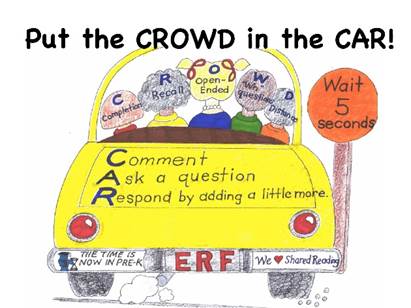
One of the most empirically supported approaches is
dialogic reading which is based on the sociocultural theory of Lev Vygotsky
where learning is constructed through mediated verbal interaction within the
zone of proximal development Dialogic reading conceives the act of reading as a
shared process of meaning construction in which students formulate hypotheses
make inferences contrast interpretations and relate texts to their life
experiences Mercer and Littleton 2019 International evidence shows that this strategy
improves inferential comprehension oral argumentation and thought
self-regulation in students with low reading performance.
Figure 1
Note: based in Chacha et al (2024)
A meta-analysis by the Education Endowment
Foundation reports that dialogic reading generates progress equivalent to five
additional months of learning in primary students with reading delays while in
Latin American contexts Chacha et al 2024 and Acosta et al 2024 confirm that
guided verbal interaction reduces fear of error strengthens fluency and
increases reading motivation These findings are consistent with the results
obtained at the María Helena Salazar institution where reading mediated by
playful and dialogic activities generated significant increases in articulation
intonation and motivation
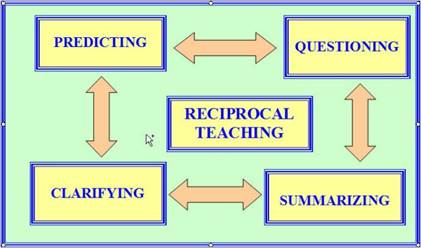
Another widely documented approach is reciprocal
teaching developed by Ann Brown and Palincsar based on four metacognitive
processes predicting questioning clarifying and summarizing This strategy
enables students to progressively assume the role of text mediators
strengthening their reading autonomy and cognitive monitoring capacity
Palincsar and Brown 1984 Studies from the What Works Clearinghouse show effect
sizes between 0 32 and 0 88 in reading comprehension among fourth to twelfth
grade students with low performance
Figure 2
Note: based in Chacha et al (2024)
In Ecuador Salcedo 2023 reports that reciprocal
teaching applied through cooperative dynamics significantly improves
inferential comprehension expressive clarity and intonation while Ichau et al
2025 confirm that collaborative teacher work strengthens students ability to
construct implicit meanings These contributions reinforce the relevance of
integrating reciprocal teaching as a structural axis in reading intervention
proposals
Playful strategies represent another fundamental
pillar in addressing low reading performance from an affective cognitive and
social approach Playfulness incorporates dramatizations role playing choral
reading reading stations narrative competitions and cooperative dynamics that
transform the classroom into an emotionally safe environment where error ceases
to be sanctioned and becomes instead a learning opportunity Chávez 2024 shows
that this approach improves reading speed by thirty eight percent and intonation
by forty one percent after six weeks of intervention results that coincide with
those obtained in the Ecuadorian study where improvements of forty five percent
in motivation and forty percent in articulation were evidenced.
From neurodidactics Acosta et al 2024 argue that
playfulness simultaneously activates cognitive and affective circuits
responsible for attention working memory and intrinsic motivation which
explains its high impact in contexts of low academic performance Chávez 2024
adds that contextualized and dramatized reading favors cognitive restoration of
semantic access strengthening global text comprehension These findings position
playfulness not only as a motivational strategy but as a structural component
of reading learning
The integration of digital technologies constitutes
an emerging and highly relevant axis in contemporary literacy Interactive
platforms digital stories educational videos transmedia narratives and online
questionnaires transform the reading experience into a multimodal process that
articulates image sound text and interaction López et al 2025 report increases
between twenty five and thirty percent in reading comprehension through
multimedia technologies in basic education while Souza and Pereira 2021 demonstrate
improvements in reading self efficacy semantic retention and participation in
digital environments.
However the literature warns that technology does
not constitute an automatic solution but rather a pedagogical mediator whose
impact depends on didactic planning teacher training and equitable access to
resources hence the need for hybrid models that combine traditional playful and
digital strategies in vulnerable contexts Gómez and Herrera 2022
A transversal aspect across all reviewed literature
is the socioemotional component Hernández 2020 demonstrates that positive
feedback validation of partial achievements and recognition of cultural
diversity significantly increase persistence effort and student participation
in reading Reading ceases to be an activity associated with failure and becomes
instead a space of recognition identity and meaning construction. This
component largely explains the high effectiveness levels of playful dialogic
and cooperative strategies compared to traditional methods.
Table 1
Comparison
of teaching strategies for low reading performance
|
Strategy
|
Theoretical
approach
|
Main impact
|
Empirical
evidence
|
|
Dialogic
reading
|
Socioconstructivist
|
Inferential comprehension
motivation
|
Mercer
and Littleton 2019 Chacha et al 2024
|
|
Reciprocal
teaching
|
Metacognitive
|
Self regulation
autonomy
|
Palincsar and
Brown 1984 Salcedo 2023
|
|
Playful
strategies
|
Affective
motivational
|
Fluency
intonation participation
|
Chávez 2024
Acosta et al 2024
|
|
Digital
strategies
|
Multimodal
|
Retention
interest reading speed
|
López et al
2025 Souza and Pereira 2021
|
Assessment constitutes another critical axis most
studies agree that standardized assessment systems centered exclusively on
normative correctness make advances in creativity argumentation self regulation
and motivation invisible Flavell 2019 proposes metacognitive assessment through
portfolios qualitative rubrics and self assessment as mechanisms more coherent
with active teaching approaches These tools allow for valuing the reading
process in an integral manner and not only the final result
In synthesis scientific literature converges in
asserting that low performance in Language and Literature is not reversed
through isolated interventions nor through traditional grammatical
reinforcement but through integrated pedagogical ecosystems where reading is
simultaneously social metacognitive emotional and multimodal This approach
fully aligns with the intervention applied in Quito which reinforces its
theoretical validity methodological transferability and relevance as a
pedagogical innovation model in basic education contexts
Methodology
This study was developed under a qualitative
approach since it focused on the interpretation of pedagogical processes the
perceptions of teachers and the observable changes in students reading
performance the research design was non experimental with a descriptive scope
because it sought to characterize the initial reading conditions of the
students and analyze the effects generated after the pedagogical intervention
the temporal design was cross sectional because the data were collected during
a single defined academic period following the criteria established by
Hernández and Mendoza 2018
The methodological framework was structured under
the action research model which conceives the teacher researcher as an active
transforming subject within the educational reality according to Moreno 2024
action research implies a dynamic and cyclical process in which diagnosis
planning action observation and reflection are articulated in a continuous
feedback loop oriented toward improvement of pedagogical practice this
methodological choice was particularly relevant for the present study because
it allowed a systematic transformation of reading teaching strategies in a real
classroom context directly addressing the low academic performance detected in
Language and Literature
The study was carried out at the María Helena
Salazar Educational Unit located in the parish of Pomasqui in the city of Quito
Ecuador a context characterized as urban peripheral with access to basic
technological resources such as digital libraries projection equipment and
interactive educational materials the target population was composed of all
fourth grade students of the institution while the sample was non probabilistic
by convenience and consisted of thirty students aged between eight and nine years
who presented persistent difficulties in fluency articulation intonation and
reading motivation
The group of key informants consisted of five
Language and Literature teachers with teaching experience ranging from three to
five years who demonstrated voluntary willingness to participate in the study
signed informed consent forms and maintained regular institutional attendance
their participation was fundamental for the processes of diagnosis validation
of the pedagogical proposal and evaluation of the observable changes generated
by the intervention
Data collection techniques were selected according
to the qualitative approach and the logic of action research the main
techniques used were participant observation semi structured interviews and
classroom performance records participant observation was conducted through a
structured observation guide applied before during and after the intervention
which allowed the systematic registration of indicators related to fluency
articulation intonation reading speed and motivation semi structured interviews
were applied to teachers at the beginning and at the end of the process using a
question script that explored teaching methodologies motivational climate and
perception of student performance classroom performance records were used to
document the evolution of students during the six weeks of pedagogical
intervention
The intervention process was structured in five
sequential phases following the classical action research model the first phase
corresponded to the initial diagnosis which consisted of identifying the main
reading difficulties and motivational barriers through observation and teacher
interviews this phase allowed the characterization of the baseline reading
profile of the students the second phase was the planning stage in which the
pedagogical proposal was collaboratively designed integrating playful strategies
dialogic reading reciprocal teaching dynamics and digital resources the third
phase corresponded to the action stage where the intervention was implemented
systematically during six consecutive weeks through structured reading sessions
the fourth phase was the observation stage in which continuous monitoring of
student performance was carried out the fifth phase corresponded to reflection
and evaluation where the results were analyzed critically and contrasted with
the initial diagnostic data
The pedagogical intervention was implemented through
three main strategic components the first component focused on dialogic and
guided reading through dramatized readings paired reading and collective
discussions oriented to stimulate oral participation inferential reasoning and
reading confidence the second component focused on playful strategies including
role playing reading competitions choral reading narrative challenges and
cooperative reading stations the third component focused on digital strategies
through the use of interactive digital stories short educational videos and
online formative questionnaires which promoted multimodal literacy and
immediate feedback
Each intervention session lasted between twenty and
forty minutes and was conducted both inside and outside the classroom
environment the weekly frequency varied between three and four sessions
depending on the phase of the intervention during the first two weeks the
emphasis was placed on activation and modeling of reading behaviors during
weeks three to five playful and digital practice intensified as the core of the
intervention during the sixth week consolidation and socialization activities
were carried out including public reading presentations self evaluation rubrics
and final fluency measurements
For data analysis a graphical evolution analysis
model was used through comparative bar graphs that visually represented the
changes observed in fluency articulation intonation and motivation between the
initial and final measurements this technique made it possible to identify
trends patterns and magnitudes of improvement associated with the implemented
strategies in addition to the visual analysis a simple percentage change
formula was applied for each indicator in order to quantify the magnitude of progress
obtained for each dimension of reading performance
For each indicator the calculation of improvement
was carried out using the following expression

In symbolic form for each indicator  the
change was expressed as
the
change was expressed as

Where  represents
the initial percentage recorded for indicator and
represents
the initial percentage recorded for indicator and  represents
the final percentage obtained after the intervention a positive value of
represents
the final percentage obtained after the intervention a positive value of  indicates
a reduction in the proportion of deficiencies or an increase in the proportion
of desirable behaviors depending on the nature of the indicator this numerical
result was then triangulated with qualitative observations and interview data
to obtain a comprehensive interpretation of the pedagogical effects
indicates
a reduction in the proportion of deficiencies or an increase in the proportion
of desirable behaviors depending on the nature of the indicator this numerical
result was then triangulated with qualitative observations and interview data
to obtain a comprehensive interpretation of the pedagogical effects
The validity of thformula-based proposal was ensured
through expert judgment considering criteria of relevance internal coherence
methodological feasibility and alignment with curricular objectives experts
evaluated the pertinence of the activities the logical articulation between
objectives strategies and indicators and the adaptability of the proposal to
similar educational contexts the consistency between empirical results the
graphical and formula based analysis and expert evaluation strengthened the internal
validity of the study
Ethical principles were strictly observed throughout
the research process participation was voluntary with informed consent obtained
from teachers and institutional authorization for student participation
confidentiality anonymity and respectful treatment of all participants were
guaranteed no personal identifiers were used in the processing or dissemination
of results and all data were used exclusively for academic and scientific
purposes
In methodological terms this study sought not only
to measure the effects of a pedagogical intervention but also to generate
contextualized knowledge about how playful dialogic reciprocal and digital
strategies operate synergistically in the improvement of reading performance
the integration of qualitative analysis action research dynamics graphical
representation of results and an explicit analytical formula provided a
comprehensive methodological framework that strengthens the reliability clarity
and transferability of the findings
Results
The results obtained after the six-week pedagogical
intervention reveal substantial variations in the core indicators of reading
performance among fourth grade students especially in fluency articulation
intonation and reading motivation the initial diagnosis showed a predominance
of deficient performance levels which confirmed the existence of a consolidated
low academic performance profile prior to the implementation of the playful
dialogic reciprocal and digital strategy
At baseline seventy percent of students presented
deficient reading fluency sixty percent showed articulation difficulties fifty
five percent demonstrated inadequate intonation and sixty five percent
manifested low motivation toward reading while only thirty five percent
evidenced high motivation these values confirmed a generalized pattern of
reading vulnerability that directly affected comprehension learning autonomy
and classroom participation
After the intervention the final measurement
revealed a significant reduction in the proportion of students classified with
deficient performance levels in the four evaluated dimensions deficient fluency
decreased from seventy to twenty five articulation difficulties decreased from
sixty to twenty intonation deficiencies decreased from fifty five to eighteen
and low motivation decreased from sixty five to twenty at the same time high
motivation increased from thirty five to eighty which confirms a strong affective
and behavioral impact of the strategy
Applying the analytical formula Δ = I − F
for each indicator the following magnitudes of improvement were obtained for
deficient fluency Δ seventy minus twenty five equals forty five for
articulation Δ sixty minus twenty equals forty for intonation Δ fifty
five minus eighteen equals thirty seven and for low motivation Δ sixty
five minus twenty equals forty five while for positive motivation the increase
was reflected as eighty minus thirty five equals forty five which demonstrates
a consistent pattern of improvement across all dimensions
These variations confirm that the intervention did
not generate isolated effects but rather a systemic transformation in the
reading profile of the student group especially in those dimensions that
historically constitute the main barriers to reading comprehension and
sustained academic performance
Table 2
Initial
Final and Improvement Values for Reading Performance Indicators
|
Indicator
|
Initial
Percentage
|
Final
Percentage
|
Δ
Improvement
|
|
Deficient
Fluency
|
70
|
25
|
45
|
|
Articulation
Deficiency
|
60
|
20
|
40
|
|
Inadequate
Intonation
|
55
|
18
|
37
|
|
Low Reading
Motivation
|
65
|
20
|
45
|
|
High Reading
Motivation
|
35
|
80
|
45
|
Note:
Values represent the percentage distribution of students classified in each
category before and after the intervention
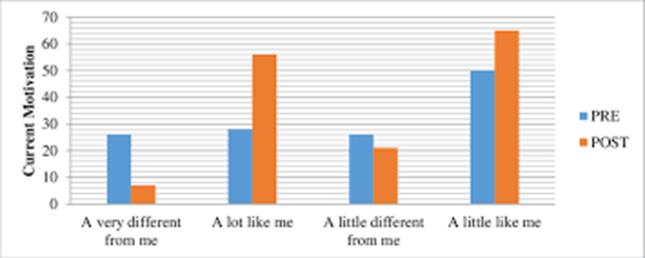
The graphical analysis of evolution allowed the
visualization of these changes through comparative bar representations where a
consistent descending pattern is observed in all deficiency indicators and an
ascending pattern in positive motivation this graphical behavior confirms the
stability and directionality of the improvement trends generated by the
strategy and reinforces the internal coherence between numerical variation and
qualitative classroom observation
Figure 3
From the qualitative perspective the observation
records reveal that during the first two weeks students showed persistent
hesitation fragmented reading frequent omissions and limited expressive
modulation however from the third week onward there was a progressive increase
in vocal confidence choral synchronization and expressive clarity particularly
during dramatized readings and cooperative narration activities by the end of
week six most students were capable of sustaining continuous reading sequences
with consistent intonation patterns and reduced articulation errors
With respect to motivation the behavioral
transformation was even more evident at the beginning of the intervention
resistance avoidance behaviors and reluctance to read aloud were common by
contrast in the final stage students actively requested participation
volunteered for public reading and demonstrated affective engagement with
narrative content this shift was particularly reinforced through role playing
reading competitions and interactive digital storytelling activities which
operated as motivational accelerators
Teacher interview results further validated the
observed transformations at the initial stage one hundred percent of teachers
recognized that their instructional practices were based mainly on repetition
and memorization and eighty percent identified low motivation as the central
obstacle to reading development after the intervention one hundred percent of
teachers reported observable improvement in fluency articulation and student
participation ninety percent classified the strategy as inclusive and effective
for students with different learning rhythms
Table 3
Teacher
Perception Indicators Before and After the Intervention
|
Indicator
|
Initial
Percentage
|
Final
Percentage
|
Δ Change
|
|
Predominance
of Traditional Methods
|
100
|
40
|
60
|
|
Recognition
of Low Motivation as Main Obstacle
|
80
|
20
|
60
|
|
Positive
Valuation of Playful Strategy
|
0
|
100
|
100
|
|
Strategy
Considered Inclusive
|
0
|
90
|
90
|
Note: Data
obtained from semi structured teacher interviews
The coherence between student performance indicators
and teacher perception indicators confirms the multidimensional impact of the
pedagogical proposal not only at the level of student outcomes but also at the
level of instructional transformation and teacher awareness of methodological
change
From the perspective of the three strategic axes
implemented dialogic reading contributed primarily to expressive confidence and
inferential participation reciprocal teaching strengthened cognitive self
regulation and monitoring of comprehension while playful and digital strategies
activated motivational engagement and cooperative dynamics, this combined
action explains the consistent magnitudes of improvement observed across all
evaluated indicators
Discussion
and Limitations
The discussion of the results confirms in a
consistent manner that the improvement observed in students reading performance
is not the effect of an isolated instructional technique but rather the product
of a structured pedagogical ecosystem articulated through dialogic reading
reciprocal teaching playful strategies and digital mediation the magnitude of
change observed in fluency articulation intonation and motivation aligns with
the strongest trends reported in the international literature Mercer and Littleton
2019 Chacha et al 2024 Salcedo 2023 López et al 2025 which reinforces the
external validity of the intervention
The reduction of forty five points in deficient
fluency and low motivation constitutes one of the most significant findings
since these two variables historically operate as the main bottlenecks in early
reading development This behavior directly corresponds with the affective and
social activation mechanisms described by Chávez 2024 and Acosta et al 2024
where lúdica and dramatization function as emotional regulators that reduce
fear of error and increase participation
The improvement in articulation and intonation with
Δ values of forty and thirty seven respectively confirms that expressive
components of reading respond positively to cooperative oral practices and
choral reading dynamics these effects are consistent with Salcedo 2023 and
Ichau et al 2025 who document that verbal expressiveness and prosodic control
increase significantly when students participate in reciprocal and cooperative
reading structures
From the cognitive perspective the observed advances
confirm that reading comprehension and performance cannot be addressed solely
through norm based correction but must be mediated through metacognitive
monitoring processes as established by Palincsar and Brown 1984 and reaffirmed
by Flavell 2019 The use of self evaluation rubrics and reflective feedback in
the present intervention activated precisely these regulatory mechanisms
explaining the sustained character of the improvements observed
The motivational variable showed the greatest
magnitude of change with an increase from thirty five to eighty percent in high
reading motivation which corroborates UNESCO 2023 findings regarding the
decisive role of reading choice dialogic participation and playful mediation in
sustaining the reading habit The digital component further intensified this
motivational effect in line with Souza and Pereira 2021 and López et al 2025
who demonstrate that multimodal literacy environments significantly enhance engagement
and persistence
The convergence between student performance
improvement and teacher perception transformation constitutes another relevant
analytical dimension the reduction of sixty points in the predominance of
traditional methodologies and the one hundred percent positive valuation of the
playful strategy demonstrate that the intervention generated not only student
level change but also a pedagogical culture shift inside the institution This
transformation coincides with Moreno 2024 who emphasizes that action research produces
structural changes in teaching identity and instructional decision making
Taken as a whole the discussion confirms that low
academic performance in Language and Literature is not a fixed deficit but a
reversible pedagogical condition that responds with high sensitivity to
methodologically coherent emotionally safe and cognitively activating
environments The integration of dialogic metacognitive playful and digital
strategies operates as a systemic accelerator of reading development instead of
as fragmented instructional resources
Despite the robustness of the observed effects
certain methodological limitations must be acknowledged The sample size was
limited to thirty students which restricts the statistical generalizability of
the results The intervention period covered six weeks which although sufficient
to observe significant short term change does not allow for longitudinal
verification of retention and transfer effects The study was conducted in a
single educational institution which introduces contextual specificity factors
related to infrastructure leadership and teacher commitment The use of
percentage based indicators while effective for graphical evolution analysis
does not replace standardized psychometric reading assessments These
limitations open future research lines oriented toward longitudinal multicenter
and mixed method studies
Conclusions
The conclusions derived from this study confirm with
high empirical consistency that the systematic integration of dialogic reading
reciprocal teaching playful strategies and digital resources generates a strong
positive impact on the core components of reading performance in students with
low academic achievement Fluency articulation intonation and motivation respond
not in a progressive and fragmented manner but through a coherent systemic
transformation once the instructional model is realigned with socio
constructivist and affective cognitive principles
The action research methodology proved to be not
only an investigative tool but a genuine mechanism for pedagogical
transformation since it allowed diagnosis intervention evaluation and
reflective adjustment to operate as a single continuous pedagogical cycle
generating immediate impact on classroom practices and teacher decision making
The motivational transformation observed constitutes
one of the most structurally relevant findings since without affective
engagement no reading improvement remains sustainable over time The transition
from resistance and avoidance to voluntary participation and public reading
confirms that emotional safety and playful mediation are structural rather than
accessory conditions for literacy development
The integration of digital resources functioned as a
catalytic factor that amplified student engagement multimodal processing and
immediate feedback reinforcing the comprehensiveness of the pedagogical
ecosystem rather than replacing traditional reading practices
From a curricular and policy perspective these
findings support the urgent need to redesign institutional reading programs
teacher training routes and evaluation systems so that Language and Literature
is taught not as a mechanical subject but as a living cultural communicative
and cognitive practice. Finally this study confirms that pedagogical innovation
grounded in research based methodologies can operate as a powerful educational
equalizer capable of reversing early academic failure trajectories and consolidating
reading as a foundational tool for lifelong learning
References
Acosta
L Orden R and Guerra S 2024 Estrategia neurodidáctica para el desarrollo de la
habilidad comprensión lectora en la educación básica Revista de Educación
Mendive 22 3 https://mendive.upr.edu.cu/index.php/MendiveUPR/article/view/3829
Chacha
N Obregón J Miranda M and Betancourt E 2024 Impacto de las estrategias de
animación a la lectura en el desarrollo de habilidades lectoras en niños de
educación primaria Polo del Conocimiento 9 9 https://doi.org/10.23857/pc.v9i9.8039
Chávez
M 2024 Acceso semántico para la comprensión lectora por medio de la
restauración cognitiva Universidad Autónoma del Estado de Morelos Tesis de
maestría http://www.riaa.uaem.mx/xmlui/bitstream/handle/20.500.12055/4928
Flavell J 2019 Metacognition and cognitive
monitoring A new area of cognitive developmental inquiry American Psychologist
34 10 906 911 https://doi.org/10.1037/0003-066X.34.10.906
Gómez
L and Herrera J 2022 Estrategias híbridas de enseñanza de la lengua en
contextos de desigualdad digital Revista Educación y Sociedad 43 2 55 74 https://doi.org/10.1590/es.v43i2.2022
Hernández
R and Mendoza C 2018 Metodología de la investigación rutas cuantitativa
cualitativa y mixta McGraw Hill https://virtual.cuautitlan.unam.mx/rudics/?p=2612
Ichau
N Nejer A Piguave M and Ulloa V 2025 El trabajo colaborativo docente como
estrategia para fortalecer la lectura inferencial en educación regular Polo del
Conocimiento 10 9 1227 1248 https://doi.org/10.23857/pc.v10i9.10378
López
D Gualli M Pilamunga T Paucar E Vacacela M and Pompilio W 2025 Un enfoque
interactivo para la educación básica de tecnologías multimedia en la enseñanza
de la comprensión lectora Ciencia Latina Revista Científica Multidisciplinar 9
1 70 89 https://doi.org/10.37811/cl_rcm.v9i1.15491
Mercer N and Littleton K 2019 Dialogic teaching and
the development of students thinking A sociocultural approach Routledge
Ministerio
de Educación del Ecuador 2025 Agenda para el fortalecimiento de bibliotecas
educativas y ambientes de lectura 2022 2025 https://recursos.educacion.gob.ec/red/agenda-de-fortalecimiento-de-bibliotecas-educativas-y-ambientes-de-lectura
Moreno
F 2024 Investigación educativa con enfoque en la investigación acción News
Trends in Qualitative Research 20 4 https://doi.org/10.36367/ntqr.20.4.2024.e1107
Palincsar A and Brown A 1984 Reciprocal teaching of
comprehension fostering and comprehension monitoring activities Cognition and
Instruction 1 2 117 175 https://doi.org/10.1207/s1532690xci0102_1
Salcedo
M 2023 El aprendizaje cooperativo como estrategia metodológica para mediar la
comprensión de la lectura Revista Letras 63 103 https://dialnet.unirioja.es/servlet/articulo?codigo=9197028
Souza
V and Pereira R 2021 Literatura digital y motivación lectora en estudiantes de
educación básica en Brasil Revista Brasileira de Educação 26 2 55 71 https://doi.org/10.1590/S1413-24782021260011
UNESCO
2023 Aportes para la enseñanza de lectura a partir del estudio ERCE 2019 https://unescollece.org/wp-content/uploads/2023/12/Aportes-Lectura-LMCS.pdf
 https://orcid.org/0000-0003-3198-675X